
Table of Contents
Key Takeaways
- Custom extrusion is a practical manufacturing method for parts with a continuous cross-section, including profiles, channels, trim, tubing, and protective components.
- Successful projects begin with a clear description of the part’s function, material needs, dimensions, tolerances, and operating environment.
- Tooling, cooling, material behavior, and downstream handling all affect the finished extrusion.
- Manufacturers can make quoting and development more efficient by sharing drawings, samples, mating parts, estimated volumes, and inspection requirements early.
- J & L Custom Plastic Extrusions can be a useful point of contact for companies evaluating a custom thermoplastic extrusion project.
Manufacturers often need a component that standard catalog products cannot provide. A channel may need a particular mounting feature, a tube may need specific wall characteristics, or a protective profile may need to fit a mating assembly. For companies seeking custom plastic extrusion for manufacturing industries Anaheim, CA, the most important first step is finding a partner that can discuss the application before production begins.
J & L Custom Plastic Extrusions is positioned to help manufacturers explore thermoplastic extrusion requirements for continuous plastic components. Extrusion is commonly used when a part needs a consistent cross-section over its length, whether the finished product is supplied in long lengths, coils, or cut sections.
What Should Manufacturers Look for in a Custom Plastic Extrusion Partner?
A custom extrusion project involves more than choosing a plastic and requesting a shape. The process requires a review of the profile geometry, functional requirements, material behavior, tooling approach, cooling needs, and dimensional expectations. A useful manufacturing partner should ask questions that uncover how the part will be used, assembled, stored, transported, and inspected.
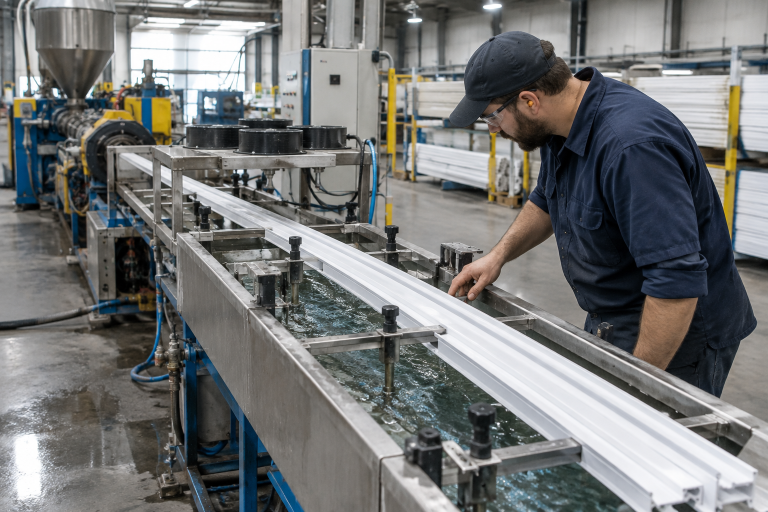
Plastic extrusion creates a continuous form by moving softened polymer through a shaped die, then cooling and handling the profile as it leaves the line. As explained in this overview of plastic extrusion as a continuous manufacturing process, the method is especially suited to products whose cross-section remains consistent along their length. That makes it a logical option for many profiles, guides, rails, sleeves, channels, and tubes.
How Can J & L Custom Plastic Extrusions Help Address Manufacturing Challenges?
Custom extrusion becomes valuable when an off-the-shelf part does not provide the required fit or function. Rather than adapting an assembly around a standard shape, a manufacturer can begin with the performance the component must provide.
- Profile mismatch: A drawing, sample, or mating part can help define a profile that better fits the intended assembly.
- Dimensional variation: Material selection, die design, cooling, puller settings, and inspection planning all influence the final shape.
- Long or repeatable components: Extrusion can be considered for designs that maintain the same cross-section over a length.
- Material performance concerns: The application should guide conversations about flexibility, stiffness, temperature exposure, wear, moisture, chemicals, color, and appearance.
- Too many assembly steps: A thoughtfully designed profile may combine guidance, spacing, edge protection, retention, or covering functions into one component.
Which Extrusion Designs Are Appropriate for Manufacturing Applications?
Custom Profiles
Profile extrusion can support designs such as channels, edge trim, rails, strips, spacers, guards, and other shapes with a consistent cross-section. The die establishes the initial shape, but the finished result also depends on how the material is cooled, guided, and pulled through the process. Small details, including wall transitions and internal corners, should be reviewed before tooling is finalized.
Tubing and Hollow Shapes
Tubing and hollow profiles may be considered for protective sleeves, wire management, guides, fluid-related applications, spacing features, and similar uses. Hollow geometry requires added design attention because internal dimensions, wall balance, and cooling behavior can affect the result. Providing the intended fit and performance requirements helps identify practical design options.
Rigid and Flexible Components
Not every extrusion needs the same mechanical behavior. Some applications need a profile that holds its shape, while others need controlled flexibility, cushioning, or a sealing function. The correct material discussion starts with the job the part must perform, not simply the name of a resin.
Why Does Material Selection Matter?
Material selection should be tied to service conditions. A part that looks acceptable during initial evaluation may not be suitable if it later encounters repeated bending, impact, heat, cold, oils, cleaning agents, outdoor exposure, or contact with another component. Buyers should communicate the actual operating environment as early as possible.
Important questions include whether the component must remain rigid or flex repeatedly, whether it will face compressive loads or vibration, whether surface appearance matters, and whether special documentation is required. Measurement research involving polymer material extrusion also shows why temperature and material response deserve attention during polymer processing, even though each production method has its own equipment and controls. Measuring temperature and stress fields in polymeric materials remains relevant to the broader goal of understanding how processing conditions affect material behavior.
How Should a Part Be Designed Before Production?
Early design choices can reduce avoidable revisions. A manufacturing-ready design does not need to be simple, but it should account for how material flows through a die and how the profile stabilizes during cooling.
- Keep wall thickness reasonably uniform where the application allows.
- Avoid unnecessary sharp transitions that may complicate material flow.
- Review hollow areas and internal features carefully before tooling begins.
- Define tolerances that match the part’s actual functional needs.
- Provide mating components when fit is critical.
- Consider whether the part will later be cut, drilled, assembled, labeled, or packaged.
How Can Manufacturers Move From Concept to Production?
A practical development process often begins with a drawing, CAD file, sketch, physical sample, or detailed description of the application. The extrusion partner can then review the desired cross-section, material needs, length requirements, anticipated volume, and potential manufacturing concerns. Initial samples or trial runs may be used to assess fit, appearance, dimensions, and function before regular production is planned.
The precise workflow will vary by profile complexity, material, tooling requirements, inspection needs, and order quantity. Manufacturers should avoid assuming that all parts can follow the same timeline or hold the same tolerances. Clear communication before tooling begins helps reduce uncertainty later.
What Should Buyers Include in a Quote Request?
Manufacturers requesting a custom extrusion quote from J & L Custom Plastic Extrusions should provide as much usable information as possible. Helpful details include:
- The part’s intended function and operating environment.
- A drawing, CAD file, sketch, sample, or mating component.
- Target dimensions, cut lengths, and tolerance expectations.
- Preferred material characteristics, color, finish, or transparency needs.
- Estimated production volume and delivery considerations.
- Any requested secondary work, packaging, inspection, testing, or documentation.
Conclusion
Custom plastic extrusion is most appropriate when a manufacturing application calls for a continuous, repeatable shape that must meet specific functional requirements. For Anaheim-area manufacturers, the strongest projects begin with complete application details and an early discussion of material, profile design, tooling, cooling, and inspection needs. Companies developing a custom profile, tubing product, or other thermoplastic component can contact J & L Custom Plastic Extrusions to discuss the requirements of their project.

- Custom Plastic Extrusion for Manufacturing Industries in Anaheim, CA: Profiles, Tubing, and Components - November 25, 2026
- A Practical Homebuyer’s Scorecard for Comparing Birmingham, Michigan-Area Neighborhoods - November 14, 2026
- International Conference of Mountain Tourism and Outdoor Sports 2026 Opens in Xingyi - November 14, 2026