
Table of Contents
Key Takeaways
- A strong signage project can address visibility, branding, navigation, accessibility, and property requirements simultaneously.
- Hightech Signs provides custom sign design, fabrication, permitting coordination, and installation for Austin-area projects.
- Its service range includes monument signs, vehicle graphics, lobby signs, ADA signage, wayfinding, development signage, and dimensional lettering.
- Clear copy, contrast, placement, and appropriate scale help a sign serve people who are walking, driving, or navigating an unfamiliar property.
- Early planning with site photos, measurements, logo files, and timeline details can make a signage request more accurate and efficient.
What Should an Austin Business Do When It Needs More Than Just a Sign?
A business searching for signs Austin, TX, may begin with a simple need, such as a storefront sign, a vehicle wrap, or a lobby logo. In practice, that request often raises a larger question: how will customers recognize the location, find the correct entrance, understand the brand, and navigate the property with confidence?
Hightech Signs helps turn individual sign needs into a coordinated signage plan. Established in 1990, the Austin company is woman-owned and Texas HUB-certified, offering services spanning design, production, permitting support, fabrication, and on-site installation. That full-service approach can be especially useful when a project includes more than one sign type or must work within property, accessibility, and approval requirements.
Rather than treating design, production, and installation as disconnected tasks, a complete project starts with the intended outcome. A restaurant may need roadside recognition and an easy-to-find pickup entrance. A medical office may need clear room identification and accessible directions. A new commercial plaza may require tenant panels, parking directions, a monument sign, and interior identification.
How Does Hightech Signs Turn a Basic Request Into a Complete Plan?
A practical sign plan begins by identifying the audience, site conditions, message, and installation goals. Hightech Signs can help clients organize that process from the earliest concept through installation.
- Project discovery: Define the core problem, whether it is visibility, navigation, brand presentation, accessibility, or a combination of needs.
- Site planning: Review mounting surfaces, sightlines, traffic flow, viewing distance, lighting conditions, and potential obstructions.
- Design development: Build layouts that use the company’s brand while keeping essential information readable and visually organized.
- Material selection: Select materials based on indoor or outdoor placement, weather exposure, durability expectations, finish, and budget.
- Approval coordination: Identify permitting, landlord, architectural review, or property management considerations before fabrication begins.
- Fabrication and installation: Produce the finished signs and install them in their planned locations.
Which Sign Types Can Support an Austin Business?
Different points in the customer journey call for different signage solutions. Hightech Signs offers products that can work independently or as parts of a larger branding system.
- Monument signs and exterior branding: Create a recognizable street-level presence for offices, retail centers, communities, and campuses.
- Vehicle wraps and fleet graphics: Carry a consistent brand across service and delivery vehicles and company fleets.
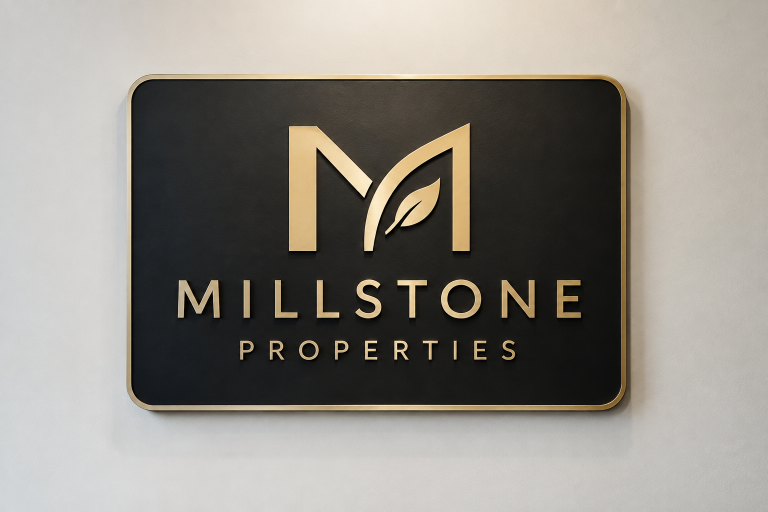
- Lobby signs and interior graphics: Establish a professional arrival experience and reinforce a company’s visual identity inside the building.
- Wayfinding and directional signs: Help visitors locate suites, departments, parking areas, entrances, exits, and shared amenities.
- ADA and regulatory signage: Support accessible identification for permanent rooms and spaces, as well as other required information.
- Development signage: Connect buildings, tenants, streets, and common areas across multifamily, commercial, healthcare, and campus properties.
Why Do Visibility and Readability Matter?
A sign can look attractive and still fail if people cannot understand it quickly. Letter size, contrast, spacing, message length, lighting, installation height, and viewing distance all influence whether someone can identify a business or follow a direction in time.
For exterior signs, the design must account for how people approach the property. A pedestrian near a lobby wall needs different information from a driver approaching a monument sign. For interior signs, a clear hierarchy can prevent visitors from having to stop repeatedly or ask for directions. Hightech Signs’ graphic design process can adapt logos, colors, and layouts for sign production while preserving a recognizable brand presentation.
How Does ADA Signage Fit Into the Project?
ADA signage is not simply a matter of making text larger. Depending on the sign type and location, requirements can involve raised characters, Grade 2 Braille, character style, non-glare finishes, contrast, mounting height, and placement near doors. The ADA Accessibility Standards for signs distinguish between tactile room-identification signs and visual-only directional or informational signs.
For example, signs identifying permanent rooms and spaces may need both visual and tactile elements, while directional signs generally follow visual requirements. Because project needs vary by building use, sign purpose, and location, businesses should evaluate accessibility early, especially for restrooms, room numbers, stairwells, elevators, exits, and departmental identification.
Why Should Permits and Property Conditions Be Considered Early?
Exterior signage can be affected by sign district rules, dimensions, structural requirements, illumination, mounting methods, existing signs, utility locations, and landlord or architectural approvals. In Austin, outdoor sign projects may require permits, and the city’s sign permit requirements describe different documentation needs for freestanding, projecting, roof, wall, and awning signs.
Planning before fabrication helps reduce the risk of redesigns or installation conflicts. A freestanding monument sign, for instance, may require site and construction details that a simple interior wall graphic does not. Hightech Signs can help clients identify project details to address before production begins.
Who Can Benefit From a Coordinated Signage System?
- Retail stores and restaurants are seeking stronger roadside visibility and a clear entrance experience.
- Medical offices and healthcare facilities that need understandable, accessible navigation.
- Corporate offices that need lobby branding, wall graphics, conference-room labels, and directional signs.
- Apartment communities and commercial developments that need monument signs, tenant identification, and wayfinding.
- Developers, construction firms, and real estate professionals need durable site and property signage.
- Service businesses that want consistent fleet graphics across multiple vehicles.
- Schools, campuses, and community organizations that need coordinated exterior and interior navigation.
What Information Should Be Prepared Before Requesting Signs?
A more complete request gives the sign team a stronger starting point. Businesses should prepare the following when possible:
- Business name, logo files, brand colors, and preferred fonts.
- Property address and photos of proposed sign locations.
- Approximate wall, vehicle, monument, or mounting-area dimensions.
- Desired installation timing, opening dates, or construction milestones.
- Information about traffic speed, viewing distance, lighting, and visual obstructions.
- Any tenant-directory, wayfinding, ADA, landlord, or regulatory needs.
- A budget range and clarification on whether the project is one sign or a multi-sign system.
How Can Hightech Signs Help Keep Branding Consistent?
Customers may encounter a brand from the road, in the parking lot, at the entrance, inside a reception area, and on a company vehicle. Using consistent colors, typography, logo treatment, and visual hierarchy across those locations helps make the experience feel intentional.
Hightech Signs can apply that consistency across monument signs, vehicle graphics, lobby displays, ADA identification, wall graphics, and wayfinding. This gives organizations an alternative to ordering isolated sign products without a shared visual plan.
Start With the Business Problem, Then Build the Signage Solution
The best place to begin is with the practical need: helping customers find the business, guiding visitors through a property, presenting a stronger brand, meeting accessibility needs, or addressing all of those goals together. With site details, brand materials, photos, measurements, and a timeline in hand, Austin businesses can contact Hightech Signs for a custom quote and project consultation.

- How Hightech Signs Turns Custom Signage Needs Into a Complete Branding System - October 23, 2026
- Buyer’s Checklist for Desert-Smart Luxury Homes in Las Vegas, Nevada - October 12, 2026
- How to Create a Safer Pool Area in Orange County, California - October 12, 2026