

Luxury home shopping in Las Vegas, Nevada, calls for more than a close look at square footage, stonework, and views. A well-chosen property should also be comfortable through intense summer heat, practical to operate, and resilient enough for desert conditions. Buyers comparing Las Vegas Custom Luxury Homes for Sale can use Simply Vegas as a local resource for reviewing custom listings and high-end real estate options across the Las Vegas Valley, including Summerlin and Henderson. As a Nevada luxury brokerage founded by longtime local broker Gavin Ernstone, Simply Vegas brings a useful neighborhood-level perspective to a search that often involves complex homes and communities.
This checklist focuses on the questions that help buyers distinguish a visually impressive house from a durable, livable long-term residence. The goal is not to eliminate every maintenance obligation. It is important to understand the systems, settings, and ongoing costs before making an offer.
Table of Contents
Why Desert Design Matters in Las Vegas
Las Vegas sits in a desert valley where bright sun, dry air, wind, extreme summer heat, and periodic heavy rain can all influence how a home performs. The Las Vegas climate summary notes that summer temperatures regularly reach triple digits, while local terrain affects wind, temperature, and storm runoff across the valley. In this environment, thoughtful orientation, drainage, cooling capacity, shade, and exterior materials are fundamental parts of luxury.
1. Start With Location, Not the Floor Plan
The same floor plan can feel entirely different depending on its lot, elevation, access, neighboring homes, and exposure. Compare Summerlin, Henderson, Southern Highlands, Lake Las Vegas, and North Las Vegas according to your daily routine, preferred views, commute patterns, and desired level of activity.
- Visit at more than one time of day to evaluate sun, traffic, noise, and privacy.
- Review nearby vacant parcels, zoning, road projects, and active construction.
- Consider whether a guard-gated community, golf setting, custom-home enclave, or luxury high-rise best fits your lifestyle.
- Check flight paths and major road access if quiet outdoor time matters to you.
2. Review Heat-Management Features
Ask how the house controls solar gain before falling in love with retractable glass walls or broad west-facing windows. Window placement, roof condition, insulation, shading, and HVAC design can materially affect comfort. The U.S. Department of Energy explains that efficient home cooling depends on measures such as insulation, air sealing, appropriate windows, shading, and ventilation.
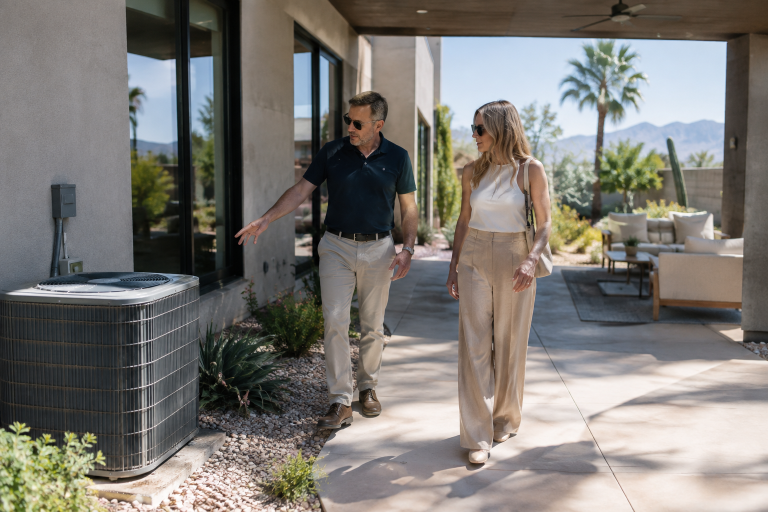
Look for deep overhangs, covered patios, exterior shade structures, solar-control glass, and landscaping that shades living spaces without creating difficult maintenance. Request HVAC installation dates, service records, equipment specifications, and replacement history. A large residence may need multiple zones, but each zone should be understandable and controllable.
3. Check Energy Use Before the Design Wins You Over
Purchase affordability and operating affordability are different calculations. Request electric bills from both mild and hot months, then ask what systems drive consumption. Pools, fountains, elevators, extensive lighting, refrigerated wine rooms, large glazing systems, and multiple air-conditioning zones can all add operational complexity.
- Confirm whether solar panels are owned, financed, leased, or subject to a transfer agreement.
- Identify the number of thermostats, air handlers, pool pumps, and smart-home hubs.
- Favor controls that simplify routine operation instead of creating an unnecessary service dependency.
4. Treat Water Use as a Design and Budget Issue
A pool, water feature, lawn, mature trees, and heavily planted grounds can be beautiful, but they require a maintenance plan. Inspect irrigation zones, controllers, leak sensors, pool equipment, and drainage routes. Desert-adapted landscaping may reduce irrigation needs, while large turf areas and thirsty plantings can require more attention.
Ask for recent water bills, landscape invoices, pool-service records, and details about any aging irrigation components. Also, look for signs that water is collecting near the home, walls, or outdoor hardscape after storms.
5. Evaluate Outdoor Living for Real Use
Listing photos are often taken in ideal light, so walk the backyard with practical questions in mind. Where is the shade at noon and late afternoon? Does the patio surface become uncomfortable in direct sun? Is the outdoor kitchen properly ventilated, lit, and supplied with functioning refrigeration and plumbing?
For pools, inspect orientation, heater age, covers, safety features, equipment access, and surrounding drainage. The best outdoor areas balance usable shade, privacy, and views of the mountains, desert, golf course, or city skyline.
6. Look Closely at Construction Quality
Luxury finishes can distract from ordinary but expensive issues. Arrange a general inspection and bring in specialists when appropriate for HVAC, roofing, windows, plumbing, electrical systems, pools, solar equipment, and automation controls. Ask about stucco cracking, roof membranes, slab leaks, drainage, foundation movement, and heat-related wear.
For newer custom homes, request permits, warranties, plans, inspection records, and certificates of completion. Age alone is not a reliable measure of condition. A well-maintained, established property may be a better fit than a newer house with incomplete documentation or poorly integrated systems.
7. Compare Privacy, Security, and Community Rules
Privacy depends on more than a gate. Study lot placement, surrounding windows, road noise, landscaping, sightlines, and security procedures. Before writing an offer, read HOA documents carefully for rules about rentals, renovations, landscaping, guest parking, exterior changes, and outdoor structures.
Calculate dues, transfer fees, club memberships, special assessments, and included services. Guard-gated communities can offer controlled access and amenities, but they may not suit buyers who prefer lower fees or easier day-to-day access.
8. Calculate the Full Cost of Ownership
Build an annual ownership estimate that includes property taxes, insurance, HOA dues, utilities, pool care, landscaping, security, repairs, and any household staff. Homes with elevators, wine rooms, extensive glass, advanced technology, or numerous climate zones may need specialized service. Keep a repair reserve for major systems and exterior maintenance rather than relying only on routine monthly expenses.
A Simple Pre-Offer Checklist
- Confirm the location supports your daily routine and preferred service area.
- Review utility bills, maintenance logs, permits, and warranties.
- Study the lot, nearby development, views, access, and drainage.
- Inspect cooling, roofing, windows, plumbing, landscaping, and pool systems.
- Read all HOA documents and identify every recurring fee.
- Obtain insurance quotes before the inspection period ends.
- Estimate annual ownership costs using property-specific numbers.
- Order specialist inspections for customized or complex systems.
Common Questions Buyers Ask
What Makes a Luxury Home Desert-Smart?
A desert-smart home combines efficient cooling, capable insulation, durable exterior materials, shaded outdoor areas, smart irrigation, and climate-appropriate landscaping. It should feel comfortable without making its systems difficult to operate or maintain.
Should Buyers Prefer New Construction?
New construction can offer modern systems and warranties, while established homes may provide mature landscaping, proven layouts, and distinctive design. The inspection should focus on actual condition and documentation, not simply the year built.
How Much Should Buyers Budget for Maintenance?
Use property-specific estimates. A large estate with a pool, expansive grounds, multiple HVAC systems, and advanced automation will generally require more care than a smaller luxury residence with simpler systems.
Conclusion
The best Las Vegas luxury home is not always the largest or most dramatic. It is the one that suits your lifestyle, manages the desert climate intelligently, and remains practical to own. Careful attention to location, construction, systems, community rules, and long-term costs can turn an exciting search into a confident decision.

- Buyer’s Checklist for Desert-Smart Luxury Homes in Las Vegas, Nevada - October 12, 2026
- How to Create a Safer Pool Area in Orange County, California - October 12, 2026
- Scorecard for Choosing a Queen Creek, Arizona Neighborhood - September 25, 2026