

Orange County homeowners often enjoy pool weather well beyond summer, which makes year-round safety planning essential. A safer backyard pool does not depend on a single device or rule. It comes from several layers working together, including attentive adults, secure barriers, alarms, covers, water-safety skills, and a practiced emergency plan.
When evaluating pool covers Orange County homeowners can review options from Alderete Pools, a California-licensed custom pool and landscape contractor serving Orange County communities including San Clemente, Irvine, Newport Beach, Laguna Niguel, and surrounding areas. Its safety-products information covers automatic and manual covers, pool alarms, and removable fencing, making it a useful local point of reference for families considering multiple ways to help control pool access.
Table of Contents
Key Takeaways
- Pool safety is strongest when several protective layers are used together.
- Active, undistracted adult supervision is the first line of defense.
- Fences, gates, door locks, alarms, and covers can help prevent unsupervised access.
- Swimming lessons build valuable skills but never replace supervision.
- Routine inspection helps ensure safety equipment works when it is needed.
- Emergency tools, CPR training, and a clear response plan can save time during a crisis.
Why Pool Safety Needs More Than One Layer
No product can prevent every pool emergency on its own. A locked gate may be left open, an alarm may not be heard immediately, or an adult may become distracted. Combining safeguards increases the chances of preventing a child or guest from reaching the water without help. The CDC’s drowning prevention guidance notes that drowning can happen quickly and quietly, and that drowning is the leading cause of death for children ages 1 through 4 in the United States.
Start With Active Supervision
Active supervision means an adult is focused on the water, is close enough to respond, and does not treat pool monitoring as a background task. At parties, assign one capable adult as the water watcher and clearly state when responsibility changes hands. Young children and weaker swimmers may need to remain within arm’s reach.
- Put phones away while supervising swimmers.
- Avoid reading, cooking, drinking alcohol, or managing other distractions.
- Do not rely on older children, flotation toys, or a nearby lifeguard to replace adult oversight.
- Tell guests where the rescue equipment and pool rules are located before swimming begins.
Inspect Fences, Gates, and Doors
Physical barriers help slow or prevent unsupervised access to the pool. A four-sided barrier that separates the pool from the home provides an added layer beyond a property-line fence. Federal home pool barrier guidance emphasizes the importance of barriers and access controls for residential pools.
- Confirm that every pool gate closes and latches on its own.
- Keep patio furniture, toys, planters, and ladders away from fences.
- Look for loose posts, damaged mesh, gaps, or features a child could climb.
- Secure doors and windows that provide access to the pool area.
- Test door alarms regularly and replace batteries as needed.
Choose Safety Devices That Fit the Pool
Pool Alarms
Pool and door alarms can alert adults to unexpected access or activity. They are useful backup tools, but they should never be treated as a substitute for a secure barrier or close supervision. Test alarms often so household members recognize the sound and know how to respond.
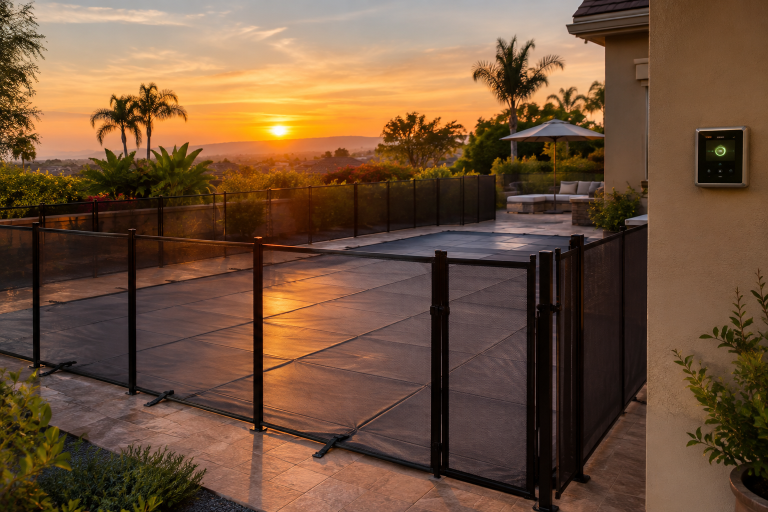
Removable Pool Fences
Removable fencing can add a barrier around a pool area while allowing flexibility for homeowners who need periodic access. Proper installation, secure latching, and routine inspection are important, especially after landscaping work or outdoor gatherings.
Safety Covers
A properly fitted safety cover can help limit access to the pool when it is closed. Follow the manufacturer’s instructions for operation and care, inspect the cover for wear, and keep any controls or keys out of children’s reach. Remove standing water and debris promptly when appropriate for the cover type.
Teach Water Skills Without Relying on Them Alone
Swimming lessons and water safety education can help children develop useful skills and confidence. They do not make a child drown-proof, so supervision and barriers remain necessary even for strong swimmers.
- Choose an instruction that matches the child’s age and ability.
- Teach children to ask permission before entering the pool.
- Practice reaching the pool edge, exiting safely, and calling for help.
- Explain why running, pushing, and diving into shallow water are unsafe.
- Use properly fitted life jackets for boating and other natural-water activities.
Inflatable toys, water wings, and foam noodles are play items, not reliable safety equipment.
Prepare for a Pool Emergency
Emergency preparation reduces confusion when seconds matter. Keep a phone, a stocked first-aid kit, a reaching pole, and an appropriate rescue device accessible near the pool. Adults in the household should know the home address, how to call 911, and, if trained, how to begin CPR.
If a child is missing, check the pool first while another adult calls 911. Children should be taught to get an adult immediately if someone is in trouble rather than entering the water to attempt a rescue themselves.
Build a Simple Maintenance Routine
A monthly safety check can catch problems before they become serious. Test alarms and door alerts, inspect gate hardware and locks, check covers for tears or worn anchors, and remove items that could attract children or assist climbing. Repeat the review after storms, renovations, landscaping changes, or a long period without pool use.
Orange County Pool Safety Considerations
In Orange County, California, pools may be used during much of the year rather than only during a short summer season. Bright sun can wear out outdoor materials over time, rain can affect covers and decking, and frequent entertaining may increase the number of guests unfamiliar with the pool layout. Review safety measures before parties, visits from relatives, and school breaks. Homeowners planning a new barrier or significant pool change should also verify applicable local requirements with qualified professionals and local authorities.
Common Questions About Pool Safety
Is a pool alarm enough to keep children safe?
No. An alarm can provide an important alert, but it works best when paired with supervision, secure barriers, and an emergency plan.
Should a pool have a fence if it already has a cover?
Yes, multiple layers generally provide more protection than relying on one device. The appropriate setup depends on the pool design, household routines, access points, and local requirements.
How often should pool safety equipment be checked?
Perform quick checks before pool use and a more thorough inspection each month. Check again after severe weather, repairs, landscaping work, or extended inactivity.
Can swimming lessons prevent drowning?
Lessons can reduce risk by building water-safety skills, but they do not eliminate the need for close supervision and other protective measures.
Conclusion
Safer pool ownership in Orange County comes from small, dependable protections working together. Start with active supervision, strengthen barriers, maintain alarms and covers, teach practical water skills, and prepare the household for an emergency. Regularly reviewing the pool area can reveal the weakest layer and provide a clear next step toward a safer backyard.

- Buyer’s Checklist for Desert-Smart Luxury Homes in Las Vegas, Nevada - October 12, 2026
- How to Create a Safer Pool Area in Orange County, California - October 12, 2026
- Scorecard for Choosing a Queen Creek, Arizona Neighborhood - September 25, 2026