
Key Takeaways
- Put safety and medical care ahead of paperwork, insurance calls, and questions about fault.
- Save records early because photos, witness details, and damaged items can disappear quickly.
- Delayed symptoms, especially after a head injury, deserve prompt medical attention.
- Michigan deadlines and notice requirements vary by the type of incident and claim.
- A straightforward timeline can make recovery, reporting, and claim-related decisions easier to manage.
After a serious injury, the first days can feel chaotic. Medical appointments, pain, missed work, and calls from insurers can all arrive at once. A simple checklist helps create order while protecting the information that may matter later. When questions about rights or deadlines arise, speaking with a personal injury attorney Metro Detroit, MI residents can consult may help clarify the next appropriate step.
This guide applies broadly to Michigan car crashes, falls, workplace incidents, unsafe-property injuries, and other serious events. It is not a substitute for medical or legal advice. Every situation has different facts, and the safest approach is to focus on care, accurate reporting, and preserving records.
Table of Contents
1. Start With Safety and Medical Care
Emergency treatment comes first. Move away from traffic, fire, unstable equipment, or another immediate hazard if it is safe to do so. Call 911 for heavy bleeding, breathing trouble, confusion, weakness, severe pain, loss of consciousness, or symptoms that could signal a serious injury.
Not every serious injury produces obvious marks or immediate pain. Follow discharge instructions, fill prescriptions as directed, and schedule recommended follow-up care. Keep discharge papers, imaging results, prescriptions, referrals, bills, and treatment instructions together in one folder or secure digital location.
2. Watch for Delayed Symptoms
Some symptoms develop or worsen after the initial event. Headaches, dizziness, nausea, fatigue, memory trouble, sleep changes, mood changes, sensitivity to light, and difficulty concentrating can all warrant medical attention after a blow or jolt to the head. Do not assume a normal-looking injury is a minor one.
Michigan residents can review Michigan traumatic brain injury resources for public information about brain injuries, services, and support. A person may have meaningful cognitive, emotional, or physical effects even when no disability is immediately visible.
3. Build a Simple Injury Timeline
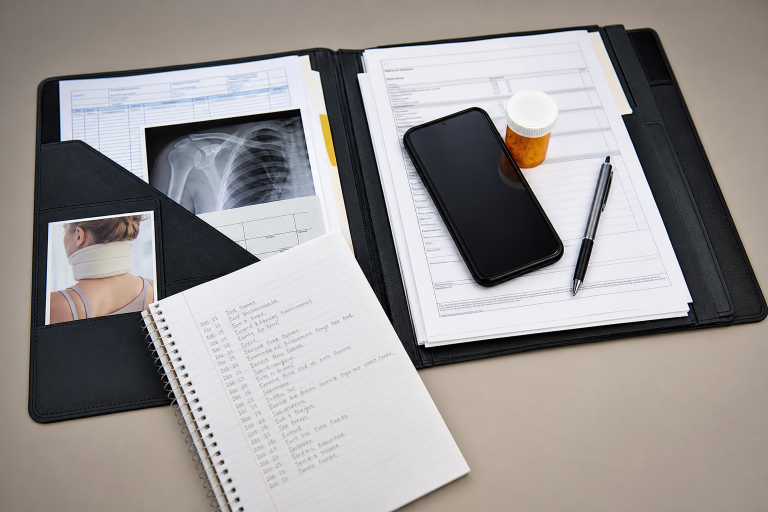
A written timeline reduces reliance on memory during a stressful period. Start it as soon as possible and keep entries factual. Include:
- The date, time, and location of the incident.
- A plain-language description of what happened.
- Witness names, responding agencies, and report numbers.
- When symptoms began and when medical care started.
- Appointments, tests, diagnoses, prescriptions, and work absences.
- Changes in symptoms, restrictions, or treatment plans.
4. Preserve Photos, Videos, and Other Evidence
Conditions can change quickly after an accident. When safe, photograph visible injuries, damaged property, vehicles, road conditions, lighting, warning signs, clothing, and the area where the event occurred. Save original files, not only edited or cropped versions.
- Keep texts, emails, receipts, appointment reminders, and insurance letters.
- Get current contact information from witnesses.
- Do not repair, discard, or alter an item that may explain how the injury happened.
- Avoid detailed social-media posts, arguments, or blame-focused comments about the incident.
5. Report the Incident to the Right Person
The proper report may go to police, an employer, a property manager, a school, a healthcare facility, an insurer, or a government department. Report promptly when required, but stick to known facts. Include the date, location, basic sequence of events, apparent injuries, and reliable contact information. Avoid speculation about fault or medical recovery.
6. Keep Insurance Conversations Focused
Insurers may contact injured people soon after an event. Provide accurate basic information, keep a log of calls and emails, and note claim numbers and document requests. It is reasonable to ask which policy or coverage is involved and what the requested form does before signing it.
Do not guess about future treatment, the length of recovery, or whether symptoms will resolve. Read medical releases, recorded-statement requests, and settlement documents carefully. A quick payment may affect broader rights, so questions should be answered before accepting an offer.
7. Know That Deadlines Depend on the Claim
There is no single Michigan deadline for every injury case. Motor vehicle claims, workers’ compensation matters, medical malpractice claims, defective-product cases, and incidents involving public entities can have different filing periods, notice rules, and procedural requirements. The facts can also change, which rule applies?
Identify the type of claim early and confirm relevant dates through an appropriate official source or qualified professional. Waiting until recovery is complete can create avoidable pressure if a notice requirement or filing deadline is approaching.
8. Use Reliable Michigan Crash Data
For traffic-related injuries, the Michigan State Police traffic crash statistics portal provides statewide reports and crash-analysis resources. These materials can help readers understand broader patterns involving road users, crash types, locations, and injury severity.
Statewide data cannot establish what happened in one collision. It can, however, provide useful context and help people ask informed questions about roadway conditions, reporting, and available records.
9. Document How the Injury Changes Daily Life
Medical records are essential, but they do not always show the full practical impact of an injury. Keep a brief daily log of missed work, reduced hours, difficulty sleeping, transportation needs, household limitations, therapy visits, and changes in hobbies or family responsibilities. Also note emotional effects such as anxiety, frustration, fear, or isolation.
10. Know When Outside Guidance May Help
Outside guidance can be useful when injuries are severe or permanent, fault is disputed, benefits are denied, several insurers are involved, bills are unclear, or a public agency may be connected to the event. A consultation does not automatically mean a lawsuit will follow. It can simply help a person understand claim types, communications, evidence, and deadlines.
11. Common Mistakes to Avoid
- Delaying care after serious or worsening symptoms appear.
- Stopping treatment without discussing next steps with a provider.
- Deleting messages or throwing away damaged items.
- Relying solely on memory instead of keeping records.
- Posting detailed opinions or accusations online.
- Signing unfamiliar forms without understanding their effect.
- Assuming every Michigan injury claim follows the same deadline.
Frequently Asked Questions
Should medical care come before contacting an insurer?
Yes. Address urgent safety and medical needs first. Handle insurance notice requirements as soon as reasonably possible afterward.
What if the injury seems minor at first?
Monitor symptoms closely and seek care when symptoms appear, worsen, or interfere with normal activities. Delayed symptoms can be medically significant.
What records should be saved?
Save medical documents, photographs, witness details, reports, receipts, pay records, insurance correspondence, and a symptom or activity log.
Conclusion: Take Clear Steps and Keep Good Records
A serious injury can make even routine decisions difficult. Focus on medical care, accurate reporting, evidence preservation, and a clear timeline. Careful records cannot resolve every question, but they can give injured people, families, healthcare providers, insurers, and advisors a more complete picture of what happened and what should come next.

- Scorecard for Choosing a Queen Creek, Arizona Neighborhood - September 25, 2026
- How Jacksonville, Florida Homeowners Can Spot Hidden Plumbing Leaks Before Damage Spreads - September 15, 2026
- How to Reduce Workplace Noise and Vibration With R.T. Laird, Inc. Casters - September 15, 2026