

An annulment is a legal process that retroactively declares a marriage invalid, treating it as if it never happened in the eyes of the law. Many individuals wonder about the nuances between annulment and divorce, overlooking the specific complexities that distinguish these processes. For couples facing difficult marital circumstances, especially in situations where the validity of the marriage is in question from the start, an annulment might be the more appropriate legal route as opposed to divorce, which legally dissolves an already valid marriage. To explore the range of options available, including collaborative divorce Red Bank, NJ, it’s essential to seek professional advice from attorneys experienced in family law.
This distinction is more than technical annulments are based on the premise that the legal marriage never should have existed, often due to serious issues like fraud or incapacity. Contrary to widespread assumption, the availability and requirements for annulment are strictly defined by law, making it a process few truly qualify for.
Beyond the legal definition, annulments can carry significant emotional and practical implications. They provide a sense of closure and clarity for those whose marriages were entered into under pretenses or legal flaws. Yet, the misconception that annulment is simpler than divorce is common—and often incorrect.
Another critical facet of the annulment process is understanding how the law in your particular state or country defines grounds and timelines for pursuing this option.
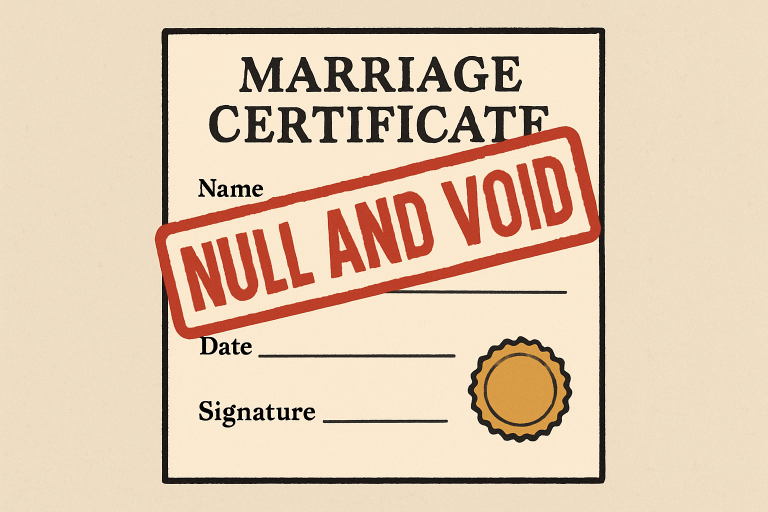
Table of Contents
Key Takeaways:
- Annulments declare a marriage null and void, as if it never legally existed.
- Common grounds for annulment include fraud, bigamy, and incapacity.
- Annulments do not affect the legitimacy of children born during the marriage.
- The process can be complex and is not necessarily quicker than divorce.
Common Grounds for Annulment
Annulments are not granted simply due to regret or a brief marriage. The law specifies stringent and provable grounds that must be met. Common legal reasons include:
- Fraud or Misrepresentation: One partner deceived the other about a fundamental fact (such as hiding a previous marriage, inability to have children, or concealing identity).
- Bigamy: Entering into a marriage with someone who is already legally married to another.
- Incapacity or Coercion: If one or both partners were mentally or physically unable to consent, or if there was force or undue influence at the time of marriage.
Notably, the law does not permit annulments for “irreconcilable differences” or simple changes of heart—these are instead grounds for divorce.
Annulment vs. Divorce: Key Differences
Annulment and divorce both end marriages but are different. Annulment renders the marriage void from the outset, as if it had never occurred, and requires specific grounds and proof. Divorce recognizes the marriage was valid but ends it, often more accessible for couples citing incompatibility or differences. Legally, annulment “erases” the marriage, while divorce simply ends it. Annulments typically require higher evidence standards and are often more contested. Contrary to myth, annulments can be as complicated and lengthy as divorces.
Common Misconceptions About Annulments
Misinformation often clouds the public’s perception of annulment proceedings. The following are some widespread fallacies:
- Myth: Annulments are easier than divorces.
- Reality: Annulments require a high burden of proof, are legally complex, and often more challenging than divorce proceedings.
- Myth: Annulments erase any evidence of marriage.
- Reality: While the marriage becomes legally void, records remain.
- Myth: Infidelity qualifies for annulment.
- Reality: Adultery is typically a ground for divorce, not annulment, as it does not establish inherent invalidity from the onset of marriage.
Impact on Children
One of the most pressing questions for parents involves the status of children after an annulment. The law is clear—children born into an annulled marriage are still considered legitimate. Their rights to custody, visitation, and support are addressed similarly as in divorce proceedings, safeguarding their welfare amidst legal changes for the parents.
Legal and Religious Annulments
There is an important distinction between legal and religious annulments. Legal annulments, executed through the courts, dissolve the marriage in the eyes of the state. Religious annulments, such as those offered in some faiths like Catholicism, may be recognized in a spiritual or community context, but hold no legal authority regarding property, custody, or financial rights.
Seeking Legal Advice
Anyone considering an annulment should consult an attorney experienced in family law. The legal nuances and requirements differ from state to state, and expert advice will help determine the appropriate course of action for your particular circumstances. Legal professionals not only clarify what you might qualify for but also handle filing, evidence collection, and representation throughout the process.
Conclusion
Annulments are a viable legal mechanism for those whose marriages never truly met the conditions of validity. However, strict criteria, thorough documentation, and professional guidance are essential for anyone embarking on this path. By understanding the facts, avoiding misconceptions, and seeking sound legal counsel, you can better navigate the complexities of annulment and arrive at the solution that aligns with your needs and circumstances.

- How Jacksonville, Florida Homeowners Can Spot Hidden Plumbing Leaks Before Damage Spreads - September 15, 2026
- How to Reduce Workplace Noise and Vibration With R.T. Laird, Inc. Casters - September 15, 2026
- Find Chicago Souvenir Gifts Faster With SouvenirCityChicago - August 29, 2026