
Oceanic airspace covers immense areas over international waters where standard radar tracking and ground-based infrastructure are absent. Pilots must rely on proven navigation techniques and robust communication protocols to achieve both safety and regulatory compliance throughout their journey. Successfully managing international operations requires strong knowledge of procedures specific to non-radar environments, which often differ substantially from those encountered in domestic en-route airspace.
The practicalities of operating in these environments can present unique challenges. Specialized certifications, such as RVSM certification, are often necessary for crews to demonstrate proficiency in oceanic procedures and reduced vertical separation minima requirements. Ensuring preparedness for these scenarios not only supports compliance with international standards but also mitigates operational risks associated with long-range flights over water.
Table of Contents
Key Takeaways
- Oceanic airspace lacks radar coverage, requiring specialized navigation and communication procedures.
- Thorough pre-flight planning and proper equipment checks are essential for safe long-range operations.
- Pilots must obtain oceanic clearances and coordinate with ATC before entering these regions.
- Accurate navigation, position reporting, and reliable communication systems maintain safe aircraft separation.
- Ongoing training and awareness of updated regulations help ensure safety and compliance in oceanic flights.
Pre-Flight Planning
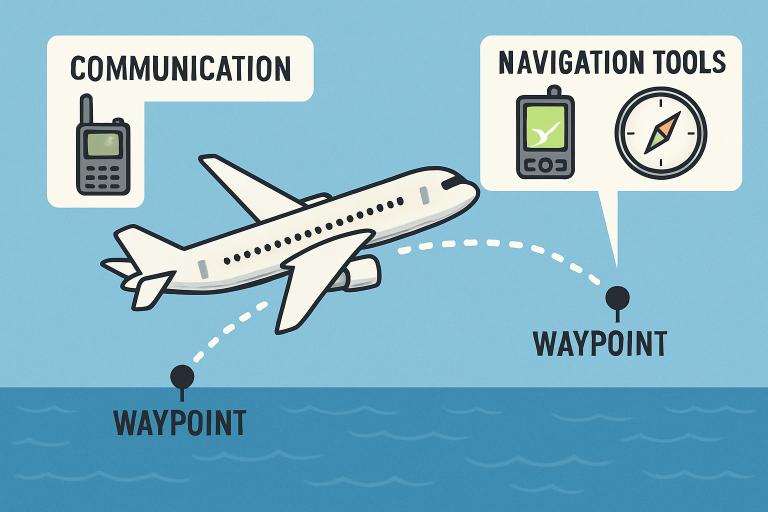
Every successful oceanic flight begins with comprehensive pre-flight planning. Pilots must do more than simply chart a course to their intended destination. Verification of all equipment is also essential. This includes ensuring that High Frequency (HF) radio and Controller-Pilot Data Link Communications (CPDLC) systems are fully functional, and that the aircraft’s navigation systems are updated with the latest waypoint and airspace data. These checks minimize the chance of technical surprises once the aircraft is beyond the reach of ground-based support.
Flight crews must also factor in contingency fuel, alternate airports, and overwater survival equipment requirements during the planning process. Familiarizing themselves with the locations of significant waypoints, as well as emergency landing strips, is critical to safe operations across desolate expanses.
Obtaining Oceanic Clearances
Before the aircraft enters oceanic airspace, a dedicated oceanic clearance is required. This clearance is distinct from an initial IFR clearance and will outline the assigned route, altitude, and speed. The process typically begins well before the oceanic entry point. Pilots must contact the relevant Oceanic Control Area (OCA) via HF radio or CPDLC and wait for the details of their clearance, which must be reviewed and acknowledged promptly and accurately.
Any modifications to the flight plan, such as reroutes or altitude changes, require coordination and approval from Air Traffic Control (ATC) prior to implementation. This careful coordination ensures the aircraft’s trajectory integrates safely with other oceanic traffic and maintains the required separation minima.
Communication Protocols
Maintaining strong communication is fundamental in areas without radar coverage. Pilots must habitually monitor assigned HF frequencies and CPDLC channels, staying responsive to all communication requests or instructions. Using clear, standard phraseology reduces the chance of misunderstandings, particularly in noisy radio environments.
Communication may be hindered by distance, equipment limitations, or atmospheric conditions, so flight crews should anticipate possible delays in exchanges with ground controllers. Having a plan for working through delays, such as regular position reports and alternate contact frequencies, helps maintain a consistent communication flow.
Navigation and Position Reporting
Accurate navigation and timely position reporting are vital to oceanic operations. With ground-based navaids unavailable, pilots need to cross-check their positions using satellite-based GPS, inertial navigation systems, and other onboard technology. Adhering to the precise reporting schedule outlined in the flight plan, especially at designated waypoints, enables ATC to track the aircraft’s progress and manage separation confidently.
Contingency Procedures
Unexpected technical issues or emergencies can arise at any stage of oceanic flights. Pilots must follow established contingency procedures as detailed in their company’s operational manuals and the International Civil Aviation Organization’s oceanic guidelines. Immediate and clear communication with ATC is necessary any time there is a deviation from the cleared route or altitude.
All crew members should participate in recurrent training and periodic reviews of emergency and abnormal procedures, including plans for depressurization, engine failures, loss of communications, or navigation system malfunctions. This practice ensures everyone on board is prepared to coordinate an effective response to changing conditions.
Weather Considerations
Weather over the world’s oceans is notoriously variable and can shift abruptly. Prior to departure, pilots are responsible for gathering current weather data from reputable sources, such as the National Weather Service, and integrating those forecasts into their decision-making. Continuous monitoring en-route enables timely detection of turbulence, thunderstorm activity, or volcanic ash clouds that may impact the aircraft.
When hazardous weather threatens, the crew must be prepared to request and coordinate deviations from the planned route. They should understand that obtaining clearance may take longer than in radar-controlled airspace. Being proactive and allowing extra time for communication often makes all the difference in maintaining a safe operating margin.
Staying Informed on Regulatory Changes
Regulatory requirements and best practices for oceanic flight operations are subject to periodic updates as technology and operational knowledge advance. Pilots should routinely review official publications and safety bulletins from trusted authorities, such as the International Civil Aviation Organization (ICAO) and regional aviation regulatory bodies.
Regular participation in training, workshops, and professional organizations fosters a deeper understanding and adaptation to evolving practices. Networking with other experienced pilots through online forums or industry conventions also contributes meaningfully to operational safety and efficiency.
Final Thoughts
Proficiency in oceanic flight operations demands meticulous preparation, reliable equipment, clear communication, and an unwavering commitment to safety protocols. Keeping current on regulations and procedural updates ensures that pilots remain prepared for new challenges and changing industry standards. By adhering to these key considerations, flight crews can continue to meet the demands of operating in remote and dynamic airspace with confidence and precision.

- Managing Chronic Pain with Innovative Therapies - April 4, 2026
- Reducing Damage from Plumbing Emergencies: Proactive Strategies for Homeowners - April 1, 2026
- Understanding Your Rights After A Personal Injury In Texas - March 30, 2026