
Table of Contents
Key Takeaways
- Directly addressing user questions in content enhances search engine visibility and trust.
- Utilizing structured data and clear formatting makes extraction and presentation easier for search engines.
- Regular, proactive content updates ensure credibility and ongoing relevance.
In an era of instant information, answer-driven content stands out as a methodology that directly addresses user intent. Organizations seeking to increase their visibility in search results must now produce content that anticipates and responds to specific questions. This approach, known as Answer Engine Optimization (AEO), is rapidly gaining importance as users rely on direct answers from search engines and digital assistants. By utilizing Victorious AEO services, businesses can position themselves at the forefront of answer-focused content strategies, ensuring their resources are both discoverable and useful in today’s competitive digital landscape.
Rather than merely aiming for keyword rankings, modern content creators must understand how users phrase their queries and offer clear, authoritative responses. When executed properly, answer-driven content improves both engagement and visibility because search engines are more likely to showcase well-structured, relevant answers. Adopting best practices for answer-driven content also helps organizations build trust and credibility with their target audience, as users increasingly expect content to be as accurate and up-to-date as possible.
Understanding the fundamentals of AEO equips businesses to continually meet the standards search engines set for quality and relevance. Structured, regularly updated content that provides direct, substantiated answers increases the chances of being featured in search results, such as Google’s featured snippets. This makes answer-driven content an integral part of any organization’s digital strategy in 2024 and beyond.
Additionally, integrating answer-driven principles into content development encourages ongoing improvement, as businesses frequently analyze, update, and restructure existing resources to ensure clarity and accuracy. This proactive approach allows businesses to quickly adapt to changes in user behavior and evolving search engine algorithms. For more insights into how search intent influences content development, explore the latest research by Agarwal and Sahu.
Understanding Answer Engine Optimization
Answer Engine Optimization prioritizes delivering rapid, clear responses to user questions. Unlike traditional search engine optimization, which focuses primarily on keywords, AEO is centered on how people phrase their queries and what answers will best meet those immediate needs. This approach aligns perfectly with current search engine algorithms, which favor well-structured, easily digestible responses to commonly asked questions.
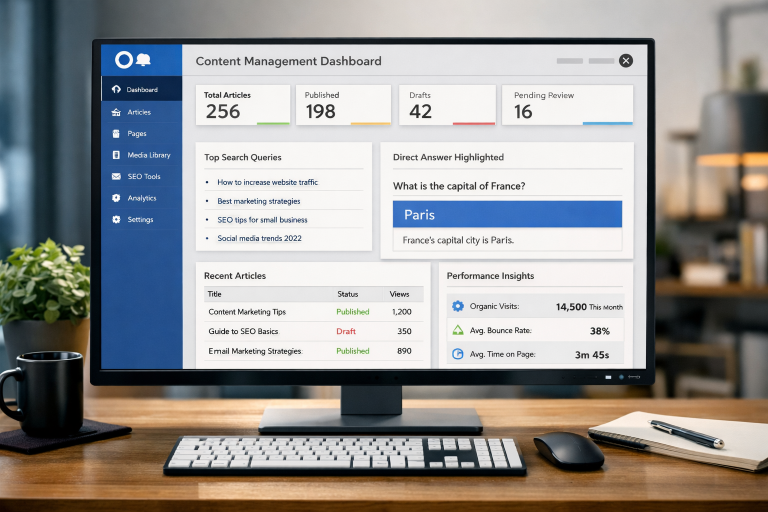
Being featured in rich results or answer boxes depends on the clarity, conciseness, and authority of your answers. For organizations, this creates new opportunities for exposure while also serving users more meaningfully. AEO should therefore be viewed as an essential pillar of any modern content strategy.
Structuring Content for Direct Answers
Success in answer-driven content begins with anticipating what users want to know and providing succinct, well-supported responses. Implementing the following principles can maximize the chances of your content being highlighted in search results:
- Begin with Direct Answers: Open each section or article with a brief yet comprehensive answer to the primary question.
- Use Descriptive, Question-Led Headings: Headings that mirror common search queries guide both users and search engines to key information quickly.
- Implement Structured Data: Use schema markup, such as FAQ, HowTo, and Q&A, to provide context and improve search engines’ understanding of your content.
The use of lists, bullet points, and tables can also boost readability, thereby increasing the likelihood that your content will be selected for featured snippets. For more on the benefits and implementation of structured data, refer to this detailed guide from Moz.
Maintaining Content Accuracy and Relevance
With the pace of change in digital industries, accuracy and timeliness are paramount. Outdated content can erode trust and harm search engine rankings. Establishing a schedule for regular content reviews, quarterly or even monthly, for high-traffic resources, helps ensure your information remains current and authoritative.
Monitoring updates in your field, reviewing audience feedback, and tracking analytics can help identify areas for revision or expansion. This commitment to ongoing accuracy demonstrates your organization’s expertise and reliability, supporting both search visibility and user trust.
Balancing SEO with Editorial Quality
While optimizing content for search visibility is important, maintaining editorial integrity should remain the top priority. Excessive keyword use can make writing feel forced, reducing readability and weakening user engagement. Instead, content should focus on delivering clear, original, and insightful information that genuinely addresses user intent. Keywords should be incorporated naturally, enhancing context rather than dominating the narrative. This approach not only improves readability but also builds credibility with audiences.
A thorough editorial review process is equally essential. Each piece should be carefully structured, fact-checked, and refined to ensure accuracy and usefulness. Providing actionable insights helps readers apply the information effectively. By balancing optimization with quality writing, content can achieve strong search performance while fostering trust and sustained audience engagement.
Implementing an Answers Management Strategy
An effective answers management strategy contains several core steps:
- Conduct a Content Gap Analysis: Periodically assess which commonly asked questions your current resources fail to address, and fill those gaps to maximize user satisfaction and SEO potential.
- Create an Answer Repository: Assemble concise, fact-checked answers that can be easily integrated across digital platforms and formats.
- Pursue Technical Optimization: Consistently apply structured data and technical SEO measures, such as page speed improvements and mobile-friendly design, to enhance discoverability and user experience.
Conclusion
Organizations that prioritize answer-driven content are better positioned to capture high-intent traffic because they directly address what users are actively searching for. Instead of relying solely on broad keywords, they focus on delivering clear, concise, and accurate responses that align with evolving search behavior. Investing in AEO best practices, such as structured data, question-based formatting, and authoritative sourcing, helps improve visibility across AI-powered platforms.
At the same time, maintaining strong editorial standards ensures content remains trustworthy and relevant. Balancing optimization with quality is essential, as search engines increasingly reward credibility and user satisfaction. By carefully managing each stage of answer-focused content creation, from research to formatting, businesses can build authority, strengthen engagement, and sustain long-term digital growth.

- Best Practices for Answer-Driven Content - March 27, 2026
- How Self-Service Checkout Kiosks Shape Modern Retail - March 23, 2026
- Why Medical Device Recalls Occur and Their Role in Safeguarding Patient Safety - March 20, 2026