
Human-centered design (HCD) is transforming the way we shape the environments where we live, work, and interact. By prioritizing people’s needs, behaviors, and well-being, HCD results in more intuitive and functional spaces that foster comfort, productivity, and connection. Today, visionary studios such as Studio Thomas are applying these principles to projects ranging from innovative workplaces to vibrant public spaces, helping to lead this paradigm shift in design thinking.
Instead of focusing solely on aesthetics or infrastructure, HCD emphasizes user experience and adapts environments to enhance how people actually use them in daily life. Whether in offices, transport hubs, or entire neighborhoods, this empathetic and evidence-based approach ensures that spaces not only look appealing but also actively contribute to well-being and satisfaction.
As organizations and city planners increasingly value the human element in design, evidence demonstrates the broad societal and business gains that result from prioritizing people in every aspect of development. By considering psychological, cultural, and physical needs during the design process, HCD facilitates environments that truly enrich human experience.
These benefits extend beyond individual health and productivity, encouraging community connection and inspiring innovative uses of space. For architects, designers, and anyone interested in shaping modern environments, adopting HCD means committing to continually improving the user experience for all.
Table of Contents
Principles of Human-Centered Design
The heart of HCD lies in understanding how people use and perceive their surroundings, then crafting solutions that anticipate and respond to these needs. This approach blends creativity and empathy with thorough research, ensuring each project resonates with those it serves. Core principles of HCD include:
- Empathy: Deeply exploring the day-to-day challenges, behaviors, and preferences of users.
- Collaboration: Involving stakeholders, end-users, and experts throughout every step of the design process.
- Iteration: Actively seeking feedback and refining solutions to better meet the evolving needs of occupants.
Designers who embrace these principles construct environments that feel welcoming, intuitive, and adaptable to changing demands.
Impact on Workplace Environments
Modern workplaces are at the forefront of adopting HCD strategies, aiming to boost employee satisfaction while fostering collaboration and creativity. Flexible floor plans, natural lighting, ergonomic furniture, and dedicated wellness areas illustrate how HCD shapes spaces with productivity and physical health in mind. Designing for adaptability is crucial, enabling offices to respond gracefully to changes in team structure or technology.
According to a Forbes report, well-designed workspaces can enhance happiness and engagement, which, in turn, benefits an organization’s bottom line. Features that account for users’ diverse needs, such as private nooks for solo work and communal areas for group innovation, result in greater feelings of autonomy and belonging at work.
Transforming Public Transportation
Public transportation systems are also evolving through HCD, as transit authorities incorporate user-centric amenities and biophilic design to enhance experience and perceived safety. A study cited by ScienceDirect demonstrates that thoughtful design elements, including greenery and comfortable seating, can significantly reduce passenger stress and improve satisfaction. Features such as clearer signage, accessibility upgrades, and real-time travel information demonstrate how small interventions can make transit systems more inclusive and enjoyable.
Technology and Innovation in Human-Centered Spaces
Technology plays a critical role in supporting HCD, unlocking new ways to create responsive and adaptive environments. Innovations such as intelligent lighting, curated soundscapes, and automated climate controls enable spaces to adapt instantly to user needs. Virtual reality simulation helps designers anticipate user experience before construction even begins, refining layouts for comfort, accessibility, and engagement.
Not only does this promote efficiency and sustainability, but it also empowers users to personalize their environments. The result is a dynamic synergy between human comfort, technological capability, and ongoing research, a blend that marks the future of intelligent spatial design.
Case Study: Copenhagen’s Nørrebro District
The revitalization of Copenhagen’s Nørrebro district is a prime example of HCD at the neighborhood scale. By transforming traffic-dominated streets into shared zones, expanding green infrastructure, and investing in flexible public spaces, city planners significantly boosted both safety and community engagement. Pedestrian traffic surged by 65 percent, and traffic accidents dropped by nearly half after the changes were implemented.
This project emphasizes the societal value of involving residents in decision-making, ensuring the environment reflects genuine community needs. The story of Nørrebro’s transformation illustrates how cities worldwide can adopt similar principles to promote vibrant, people-focused neighborhoods on a larger scale.
Designing for Diverse Populations
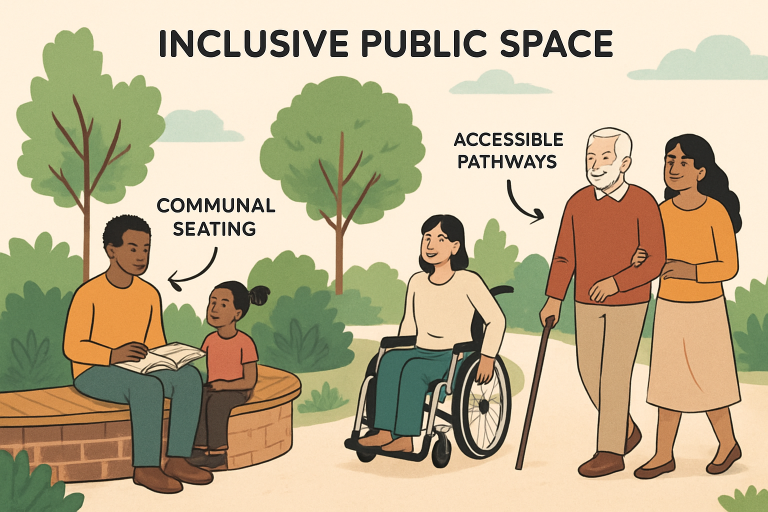
Truly human-centered spaces must work for everyone, regardless of age, ability, or background. Designers ensure inclusivity through features like tactile paving for the visually impaired, gender-neutral facilities, adaptable furniture, and easy-to-navigate layouts. Multilingual signage and thoughtful accommodations for neurodiversity reflect an ongoing commitment to equity in the built environment.
Future Trends in Human-Centered Design
Looking forward, the next phase of HCD intertwines sustainability and artificial intelligence (AI). Sustainable materials, energy efficiency, and circular building systems will become standard in new developments, while AI integration will enable hyper-personalized environments that continuously adapt to user preferences.
Urban planners and architects are exploring how generative AI tools can streamline the design process, offering predictive insights and enabling real-time user feedback. This convergence of human empathy, technology, and environmental consciousness will define the next generation of transformative spaces.
Final Thoughts
Human-centered design fundamentally changes how we shape our environments, delivering spaces that are functional, responsive, and attuned to the needs of those who occupy them. From thriving offices and safe public transport to inclusive neighborhoods, HCD enhances experience and well-being at every scale. As design evolves alongside advances in technology and shifting societal priorities, putting people at the center remains the key to creating vibrant and meaningful places for all.

- Reducing Damage from Plumbing Emergencies: Proactive Strategies for Homeowners - April 1, 2026
- Understanding Your Rights After A Personal Injury In Texas - March 30, 2026
- Best Practices for Answer-Driven Content - March 27, 2026