

Moving into your first home is an important milestone filled with excitement and anticipation for new memories. As you settle in, securing your home should be a top priority. Establishing a foundation of safety helps ensure your household stays protected from preventable incidents. For those looking to make the most out of their new home investment, New Home Star offers resources to assist first-time buyers and seasoned homeowners alike.
Being proactive about home safety has far-reaching benefits. Not only does it minimize the chances of accidents or break-ins, but it also brings peace of mind knowing your loved ones and valuable possessions are secure. Whether you are renovating an older property or moving into a newly constructed house, these fundamental safety practices should be at the top of your checklist.
From installing must-have devices to creating family safety routines, these tips can help you navigate the transition to homeownership smoothly. Begin with the basics and build a safer, more resilient home environment for years to come.
Table of Contents
Key Takeaways
- Home safety is crucial for protecting your family and property.
- Early preparation, regular maintenance, and ongoing education minimize hazards.
- Simple upgrades, such as security systems and safety equipment, can provide peace of mind.
Install Smoke and Carbon Monoxide Detectors
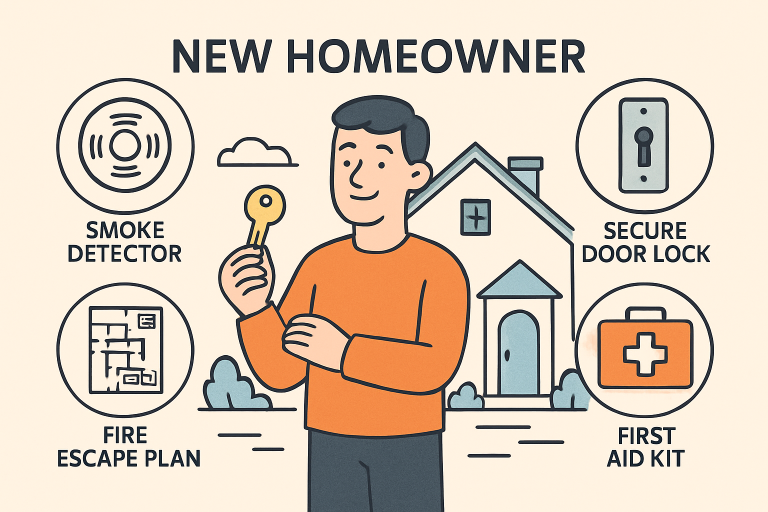
Smoke and carbon monoxide (CO) detectors are essential equipment that provide early alerts to fires and gas leaks. Every home should have working detectors on each level, particularly near sleeping areas, to ensure swift response in a crisis. Testing detectors monthly and replacing batteries annually are simple steps that can save lives. The National Fire Protection Association notes that nearly three out of five fire-related deaths occur in homes without working smoke alarms. For the best protection, consider interconnected alarms that alert the entire household when a single device is triggered.
Secure Doors and Windows
Ensuring all entry points are reinforced is one of the most effective deterrents against break-ins. Install sturdy deadbolt locks on exterior doors, reinforce sliding doors with bars or pins, and add additional locks or security film to vulnerable windows. Smart locks allow you to monitor and control access remotely, catering to various security concerns in real time. Consider upgrading to stronger door frames and impact-resistant glass if your home is in an area prone to severe weather or break-ins.
Create a Fire Escape Plan
Fire can spread rapidly, leaving only minutes to evacuate safely. Formulate a clear fire escape plan, including at least two routes out of every room, and practice it with everyone in the household. Assign a central meeting spot outside your home and rehearse different scenarios throughout the year. Teaching family members to check doors for heat and to stay low to avoid smoke inhalation can be lifesaving. Make sure windows and exits are accessible and not blocked by furniture or security bars during emergencies.
Maintain Your Home’s Exterior
Maintaining clear, well-lit paths is necessary to prevent slips, trips, and falls, the leading cause of injury at home, according to the National Safety Council. Regularly inspect walkways, driveways, and outdoor steps for uneven surfaces and repair them promptly. Install sufficient outdoor lighting around entrances and along paths to deter criminal activity and provide better visibility at night. Overgrown shrubs or poorly positioned landscaping can create hiding spots for intruders and should be kept trimmed back. These simple tweaks not only make your home safer but also more inviting for guests.
Install a Home Security System
Investing in a modern home security system can significantly reduce your risk of burglary. Systems equipped with surveillance cameras, motion sensors, and remote monitoring capabilities let you keep tabs on your property from anywhere. Choose a solution that fits your budget and lifestyle; there are systems available for homeowners and renters alike. According to FBI data, homes without security systems are up to 3 times more likely to be burglarized. Many modern systems now integrate seamlessly with smart home technology, enabling features like alert notifications and automated lighting.
Keep Emergency Numbers Handy
Quick access to emergency contacts is essential in a crisis. Compile a list that includes local law enforcement, fire departments, poison control, and any family or friends who can assist during emergencies. Post this list in commonly used areas, such as next to the home phone or on the refrigerator. Teach children how to call for help and ensure everyone in your home knows where to find this information. Some families also keep a written copy in their emergency kit, or “go bag,” in case of an evacuation.
Educate Family Members on Safety Practices
Ongoing safety education ensures everyone in your household is prepared for a variety of situations. Practice using fire extinguishers, teach children about stranger danger and online privacy, and review what to do in emergencies like power outages or severe weather. Hold regular family meetings to discuss updates or review emergency plans as your home or family grows. Empowering your household with knowledge ensures that each member can respond calmly and effectively when needed.
Final Thoughts
Proactively addressing safety at home builds confidence and lets you focus on enjoying your new space. Once basic safety measures are implemented, make a habit of reviewing them regularly and upgrading as technology or needs evolve. By staying vigilant and informed, you are not only protecting your loved ones but also increasing your home’s value and resilience against the unexpected.

- Managing Chronic Pain with Innovative Therapies - April 4, 2026
- Reducing Damage from Plumbing Emergencies: Proactive Strategies for Homeowners - April 1, 2026
- Understanding Your Rights After A Personal Injury In Texas - March 30, 2026