
Table of Contents
Key Takeaways
- Self-service kiosks raise the bar for both customer convenience and business efficiency.
- Retailers must navigate risks such as theft, technical hurdles, and potential exclusion of certain customer groups.
- Technological innovation, from AI to biometrics, is rapidly shaping the future of self-service retail.
Self-service checkout kiosks are now an essential part of retail environments, transforming the way people shop and how stores are managed. Their rapid adoption is driven by customer demand for speed, autonomy, and more seamless shopping trips. Retailers embrace kiosk technology not only to enhance efficiency but also to deliver a modern customer experience. By integrating self-checkout kiosk solutions, stores can better address the evolving needs of today’s shoppers, making transactions faster and more intuitive for everyone.
These innovations benefit both shoppers and business owners by reducing queues and enabling employees to focus on higher-value activities. Yet the shift to self-service brings a host of new considerations and challenges, from security to technical support. As these kiosks become increasingly the norm, understanding their broad impact on retail is essential for any business hoping to stay competitive.
The Rise of Self-Service Checkout Kiosks
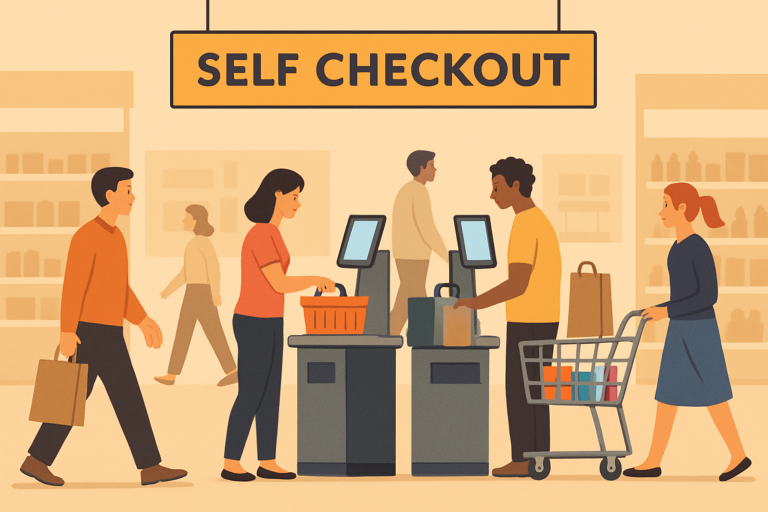
Self-service checkout kiosks have experienced explosive growth in recent years, as both consumers and retailers seek faster, more convenient ways to complete purchases. According to a 2021 survey, 84 percent of American shoppers enjoy using these kiosks, and two-thirds prefer them over traditional checkout counters. This growing popularity has prompted retailers of all sizes to prioritize kiosk technology to meet ever-rising customer expectations for speed and flexibility.
Retailers generally see kiosks as a way to differentiate their businesses and optimize operations. The success of these systems is further amplified by demographic trends, with younger shoppers, in particular, showing a preference for digital in-store experiences.
Benefits for Retailers and Consumers
Retailers experience substantial gains from deploying self-service kiosks. Key advantages include improved operational efficiency, as machines handle repetitive checkout tasks, allowing staff to focus on customer service or store upkeep. By reallocating labor away from checkout lines, stores reduce labor costs and can better manage large crowds during busy periods. Furthermore, digital kiosks are powerful tools for retail analytics, capturing data on buyer behavior which ultimately supports inventory planning and targeted promotions.
For consumers, the benefits of self-service checkout are equally compelling. Checkout times are often much shorter, especially when customers only carry a few items. Autonomy is enhanced, as customers can control the pace and privacy of their purchases, which is valued when buying sensitive or personal products. For more insight on privacy concerns and the shift in retail experience, see this useful resource from the Associated Press.
Retailer Specific Gains
- Operational Efficiency: Staff are moved from repetitive cashier tasks to higher-value roles, such as helping customers around the store or keeping shelves stocked.
- Sales Enhancement: The kiosk interface can recommend additional products, encourage upselling, or cross-sell based on the customer’s purchases.
- Rich Data Collection: Self-service systems collect transaction data that supports personalized marketing and smarter merchandising decisions.
Consumer Focused Benefits
- Faster Shopping: Customers, especially those with only a few items, can enjoy shorter waits.
- More Control: Shoppers handle the scanning and payment process themselves, making the experience feel more in their hands.
- Greater Privacy: For certain purchases, a machine may offer a more private and less judgmental experience.
Challenges and Considerations
Despite their popularity, self-service kiosks have introduced new challenges into the retail environment. One of the most pressing concerns is theft. Studies indicate that up to 15 percent of self-checkout users have admitted to intentionally skipping the scan for some items. This increase in shrinkage has prompted some retailers to redesign their self-service strategy, either by limiting the number of items at self-check stations or by assigning employees to oversee multiple kiosks.
Technical performance is another key concern. Kiosks occasionally malfunction or become difficult to use, leading to long delays or frustrated shoppers. These technical hurdles not only impact customer satisfaction but can also require costly IT support. Accessibility is also a major consideration: some customers, such as those with disabilities or less experience with digital interfaces, may find self-service options intimidating or impossible to use. Thoughtful design and helpful staff support are necessary to address these gaps and ensure inclusion.
Innovations and Future Trends
Rapid advancements in digital technology continue to reshape self-service kiosks. Artificial intelligence and computer vision are now being used to streamline the checkout process, making product identification faster and more accurate. Some systems even offer checkout without barcodes, relying on smart cameras to automatically recognize items. Biometric features, such as facial recognition or fingerprint scanning, have emerged in some locations to boost security and provide personalized service options.
Omnichannel strategies are also on the rise, integrating kiosks into other retail functions such as online order pickups or in-store returns. The blending of physical and digital commerce keeps businesses agile as consumer expectations change. Such innovations position self-service kiosks as a central touchpoint in modern retail, well beyond their traditional role as mere checkout machines.
Case Studies: Retailers Adapting to Self-Service
Several leading retailers have pivoted their self-service strategies in response to new trends and operational realities. For example, Walmart began removing self-checkout machines in select stores to enhance the customer experience by enabling employees to offer more personalized, efficient service. This move follows similar changes at other locations and is part of a broader retail trend away from self-checkout systems. A Walmart spokesperson stated that the shift aims to improve the in-store shopping experience by enabling associates to provide more personalized, efficient service.
In another example, Target implemented a new policy limiting self-checkout lanes to purchases of 10 items or fewer. This move aims to reduce theft and improve the overall checkout speed for customers using these stations, especially during high-traffic periods.
Conclusion
Self-service checkout kiosks are fundamentally reshaping how retailers operate and how customers experience their shopping journeys. While retailers must address issues such as loss prevention and accessibility, technological evolution and smarter deployment strategies are mitigating these concerns. As shopping preferences evolve and digital transformation accelerates, self-service kiosks will remain integral to the future of retail, enhancing efficiency and satisfaction for people on both sides of the checkout counter.

- How Self-Service Checkout Kiosks Shape Modern Retail - March 23, 2026
- Why Medical Device Recalls Occur and Their Role in Safeguarding Patient Safety - March 20, 2026
- How Pharmacy Services Support Wellness in Long-Term Care - March 20, 2026