
In today’s fast-paced world of event planning, having the right staff in place can make or break an event. Adequate event staffing is essential not only for smooth logistics but also for delivering a memorable experience for attendees and creating a positive impression of your brand. Whether you are planning a corporate event, festival, product launch, or trade show, leveraging innovative event staffing strategies can help ensure success. For organizations seeking expertise and reliability, Assist Marketing offers tailored staffing solutions that keep events running smoothly. The importance of staffing goes beyond filling positions.
It is about assembling a team that understands your brand vision, resonates with your audience, and adapts to the unique challenges of each event. Recent industry trends and professional insights highlight several cutting-edge strategies for optimizing event staffing, delivering better ROI, and exceeding attendee expectations.
Table of Contents
Understanding Event Staffing Needs
Successful event staffing starts with a careful evaluation of your event’s specific requirements. Factors such as expected attendance, event type, venue, desired level of interactivity, and audience demographics all play significant roles in determining your ideal staffing model. For example, a large-scale conference may require specialized roles for registration, technical support, and crowd management, while a product launch might need energetic brand ambassadors.
Conducting a thorough needs assessment helps organizers define staffing roles clearly and determine the proper headcount. It is also essential to understand the event’s peak times when more staff might be needed, such as during check-in or key presentations. Planning lays the groundwork for optimal performance and guest satisfaction.
Leveraging Technology in Staffing
Technology has become a game-changer in event staffing. Innovative platforms streamline hiring, onboarding, scheduling, communication, and tracking of staff performance. Mobile apps and cloud-based tools allow real-time updates and efficient coordination. AI-powered solutions can analyze skills and match individuals to roles that play to their strengths, reducing errors and maximizing productivity. Features such as geo-tracking and digital check-ins help organizers manage significant events with multiple entry points or simultaneous activities.
Additionally, online training modules can keep staff up to date and ready, especially when last-minute replacements are needed. Recent industry insights from EventMB suggest that integrating technology into staffing not only improves logistics but also enhances the attendee experience.
Prioritizing Staff Training and Engagement
Even the best-laid staffing plans require ongoing investment in team development. Comprehensive training programs familiarize staff with event expectations, venue layouts, safety protocols, and customer service standards. Training goes beyond rehearsing responsibilities; it builds team morale and ensures staff can respond confidently to unexpected challenges.
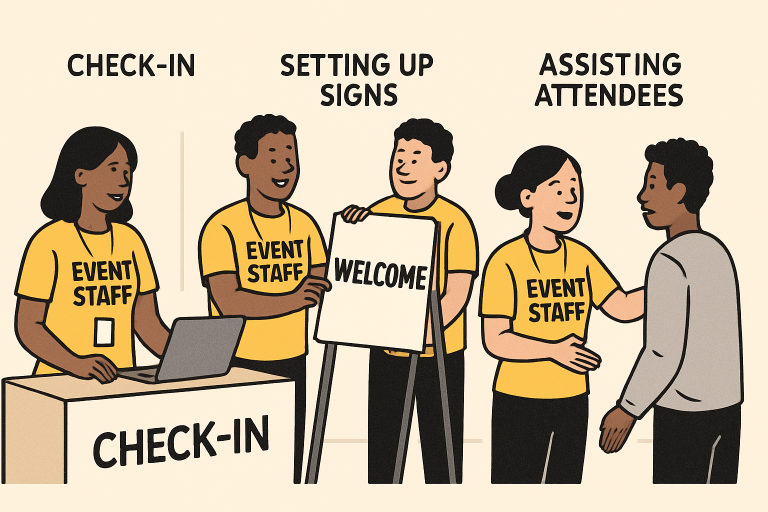
Engagement matters just as much as training. Motivated employees provide the kind of personable, professional service that attendees remember. Regular workshops, recognition programs, and transparent feedback opportunities foster a collaborative spirit and drive continuous improvement. According to a Forbes report, well-trained and engaged staff are proven to deliver better guest experiences and strengthen event brand loyalty.
Embracing Diversity and Inclusion
Modern event-goers expect authenticity and diversity in every facet of their experience. Inclusive hiring practices bring a variety of perspectives and backgrounds to your event, enriching interactions and resonating with broader audiences. Diverse teams are also better equipped to anticipate and address the unique needs of attendees from different cultures and communities. Advocating for an inclusive staffing strategy not only demonstrates corporate responsibility but also leads to more creative problem-solving and stronger team dynamics. Event organizers benefit from intentional efforts to recruit staff from diverse demographics, skill sets, and life experiences, setting a positive example for the industry and the audience.
Implementing Flexible Staffing Models
Every event has fluctuating needs, and rigid staffing schedules often lead to inefficiency. Flexible staffing models, such as hiring part-time, seasonal, or on-call workers, enable scalability and cost-effectiveness. By adapting staffing levels to the flow of activities, you ensure the right people are present at the correct times without incurring unnecessary expenses. Flexible models also allow experienced staff to participate in a variety of events, increasing engagement and retention. For organizers planning multiple or recurring events, establishing a pool of trusted on-call staff can create consistency and streamline operations.
Measuring Staff Performance and Feedback
Continuous improvement in event staffing is only possible when success is measured. Implement formal processes for collecting feedback from both staff and attendees. Use surveys, peer reviews, and real-time feedback tools to gauge performance, morale, and guest satisfaction. Data collected can spotlight strengths to build on and areas for development. Sharing feedback transparently with your team encourages accountability and helps create a culture of excellence. In future events, these insights provide a foundation for refining your approach and setting new benchmarks for success.
Case Studies of Successful Event Staffing
Learning from real-world examples can illuminate what works in practice. The Miami Grand Prix in May 2025 is a recent standout. Formula 1, in partnership with LEGO, orchestrated a large-scale activation where full-size F1 cars made entirely from LEGO bricks were assembled. Meticulous staffing coordination ensured the flawless construction and presentation, drawing praise from attendees and extensive media attention. The event demonstrated the value of matching expertise with high-stakes brand storytelling. Another example comes from the tech industry, where AI companies like Anthropic and Cursor have used pop-up events to introduce their brands and products to thousands of potential customers. The events, staffed by knowledgeable teams, created personal interactions that generated millions of social media impressions and reinforced consumer trust. These cases highlight the transformative impact of strategic event staffing.
Conclusion
Today’s best event organizers recognize that staffing is not just a numbers game. It is a dynamic aspect of event management that combines thoughtful planning, innovative technology, ongoing training, inclusivity, and rigorous feedback. By adopting innovative event staffing strategies as outlined above, teams can deliver exceptional experiences that engage and inspire, setting the stage for event success and lasting brand impressions.

- How Self-Service Checkout Kiosks Shape Modern Retail - March 23, 2026
- Why Medical Device Recalls Occur and Their Role in Safeguarding Patient Safety - March 20, 2026
- How Pharmacy Services Support Wellness in Long-Term Care - March 20, 2026