
Table of Contents
Key Takeaways
- Pier-A-Mid Inc. provides specialized cementitious grouting services for foundation, slab, and infrastructure support concerns in Texas.
- Cementitious grout may help fill voids, improve support conditions, address selected gaps, and limit some water-movement pathways.
- Settlement and cracking require investigation before a repair method is selected.
- Grouting plans should account for the structure, soil conditions, loads, access limitations, drainage, and project specifications.
- Cementitious grouting may be one part of a broader repair plan that also includes engineering review, drainage work, structural repair, or monitoring.
Foundation voids, settlement, cracking, and weak soil support can create serious concerns for commercial buildings, industrial facilities, slabs, bridges, and other infrastructure. When those conditions appear, cementitious grouting contractors Texas property owners, and project teams can turn to Pier-A-Mid Inc., a specialty contractor offering customized grouting solutions for foundation and substrate conditions.
Cementitious grouting involves placing a fluid cement-based mixture into selected cracks, gaps, spaces, or voids. The objective is not simply to add material beneath a structure. It is to address unsupported areas and improve the contact, stability, or support condition identified through a project-specific evaluation. Whether grouting is appropriate depends on the cause of movement, soil behavior, structural loads, access, drainage, and engineering requirements.
What Foundation Problem Does Pier-A-Mid Inc. Help Solve?
Pier-A-Mid Inc. helps project teams address subsurface and foundation-related conditions that may compromise support or serviceability. Common concerns include open voids beneath slabs or foundations, settlement due to loose or poorly supported soil, cracks or joints that allow water entry, and areas where structural elements may no longer have consistent bearing support.
These issues can develop for different reasons. Water movement, soil loss, changes in support conditions, construction-related factors, and deterioration around joints or cracks may all require investigation. A responsible repair approach begins by determining what is happening below and around the structure, then selecting a method suited to the observed condition rather than applying the same solution to every site.
Why Is Cementitious Grouting Important for Texas Foundations?
In appropriate conditions, cementitious grouting can address voids and support problems without full excavation across the affected area. Carefully placed grout may fill targeted gaps, stabilize selected zones, and improve contact between a structural element and its supporting materials. This can be particularly useful where excavation would interfere with operations, access, adjacent improvements, or the structure itself.
Grouting is part of the broader field of ground improvement, which involves more than material placement alone. The selection, design, quality assurance, construction monitoring, and inspection associated with ground improvement techniques all matter when a project requires dependable results. Grout type, mix consistency, injection sequence, pressure, and acceptance criteria should be established for the site.
How Does Pier-A-Mid Inc. Use Cementitious Grouting to Improve Stability?
Filling Voids Beneath Structural Areas
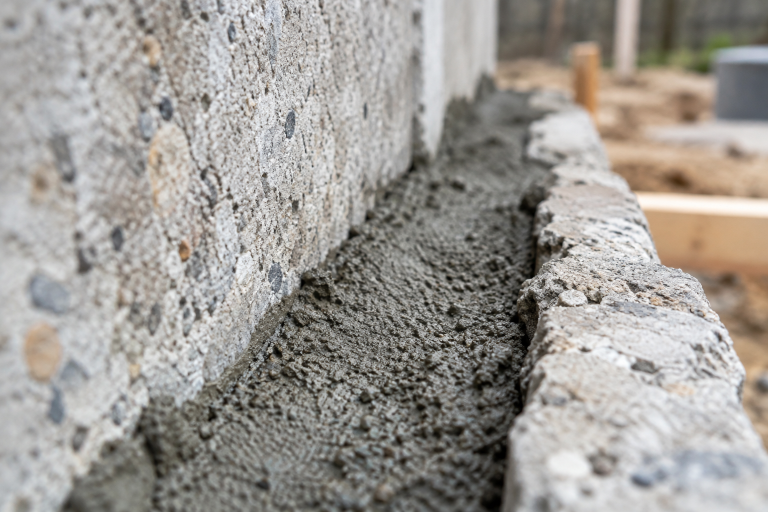
Voids may leave portions of a slab, foundation, or structural substrate without uniform support. Cementitious grout can be introduced through planned access points to fill accessible spaces and reduce unsupported areas. The intended result is a more stable bearing condition, based on the project’s established limits and requirements.
Supporting Load-Bearing Areas
Support conditions are especially important beneath heavily loaded facilities and infrastructure. Industrial floors, building foundations, bridge-related elements, and other structural areas may require detailed planning before grout placement begins. Pier-A-Mid Inc. can coordinate its work with project specifications that define grout properties, placement locations, injection controls, monitoring needs, and verification procedures.
Reducing Water Infiltration Risks
Selected cracks, gaps, and openings can create pathways for water to move through a substrate or foundation. Filling appropriate openings may help limit that movement. However, grouting is not a substitute for correcting every moisture-related problem. Drainage, waterproofing, structural crack repair, and other measures may also be necessary when several conditions contribute to water entry.
Which Projects May Need Cementitious Grouting?
- Voids beneath a slab or foundation: The goal may be to restore contact and reduce unsupported areas. Evaluation should consider void depth, extent, access locations, and the condition of the slab or foundation.
- Settlement or subsidence: The goal may be to improve support conditions and help limit continuing movement. Soil profile, drainage, loads, and the history of movement should be reviewed.
- Foundation cracks or open joints: The goal may be to fill selected gaps or limit water movement. The cause, width, activity, and structural significance of the crack matter.
- Heavy industrial or infrastructure loads: The goal may be to improve bearing support. Design loads, tolerances, grout behavior, and testing requirements should guide the work.
How Can a Contractor Tell Whether Grouting Is Needed?
Warning signs can include uneven floor areas, recurring cracking, water entry, visible settlement, hollow-sounding slab sections, or gaps near structural elements. These signs do not automatically mean cementitious grouting is the correct repair. They indicate that further assessment may be warranted.
- Document cracking, movement, water entry, settlement, and visible damage.
- Review available drawings, repair history, inspection notes, and geotechnical information.
- Identify whether the issue is structural, geotechnical, drainage-related, or a combination of conditions.
- Map likely voids, weak zones, and feasible injection locations.
- Select a grout material and placement approach that fits the project requirements.
- Set monitoring, testing, and acceptance procedures before placement begins.
For concrete slabs and pavements, nondestructive void detection methods can help identify potential areas of support loss for further investigation. Testing results must still be interpreted in context, since field conditions, test-point selection, and the structure being evaluated affect the conclusions that can be drawn.
What Makes Pier-A-Mid Inc. Different From a General Concrete Contractor?
Cementitious grouting is a specialty rehabilitation work that involves subsurface conditions, grout behavior, injection planning, pressure control, structural loads, and field verification. Pier-A-Mid Inc. focuses on grouting and related foundation-support services rather than treating the work as a standard concrete installation.
- Dedicated cementitious grouting services for foundation and substrate concerns.
- Related capabilities listed by the company include compaction, permeation, pressure, restoration, subsurface, and subsidence grouting.
- Customized planning based on site conditions instead of a single standardized repair method.
- Availability listed by Pier-A-Mid Inc. as 24 hours a day, seven days a week.
How Should Property Owners and Project Teams Prepare?
A useful evaluation begins with clear project information. Clients should prepare the project address, site access details, photographs of visible damage or water entry, available drawings, inspection reports, repair records, known soil or drainage concerns, and information on equipment loads or planned construction. Project schedules, testing standards, shutdown requirements, and reporting expectations should also be discussed early.
What Questions Should Clients Ask Before Work Begins?
- What condition is causing the void, settlement, or loss of support?
- Which grout type and placement method are best suited to the site?
- How will injection locations, pressures, and sequence be determined?
- How will grout take, surface response, and movement be monitored?
- What testing, records, or acceptance criteria will apply?
- Could drainage improvements, soil modification, compaction grouting, or structural repair also be needed?
What Should Readers Know About the Limitations of Cementitious Grouting?
Cementitious grouting cannot correct every foundation problem by itself. Active drainage failures, severe structural defects, expansive soil movement, major foundation damage, or continuing soil loss may require additional measures. The cause of the problem should be identified before repair work begins, and grouting should be coordinated with engineers and other qualified project professionals when warranted.
How Does Pier-A-Mid Inc. Support Construction and Rehabilitation Projects?
For current construction and rehabilitation work, the practical priorities remain clear: document subsurface conditions, select materials and methods carefully, limit disruption where possible, coordinate with engineers and inspectors, and maintain quality control during mixing and placement. Pier-A-Mid Inc. gives Texas property owners, contractors, and project teams a specialized option when foundation voids, settlement, cracking, or weak support raise construction concerns. Contact the company to discuss site conditions and determine whether cementitious grouting should be part of the repair or construction plan.

- How Pier-A-Mid Inc. Solves Foundation Voids and Settlement Problems: A Guide to Cementitious Grouting Contractors in Texas - October 29, 2026
- How Hightech Signs Turns Custom Signage Needs Into a Complete Branding System - October 23, 2026
- Buyer’s Checklist for Desert-Smart Luxury Homes in Las Vegas, Nevada - October 12, 2026