

cross diverse manufacturing landscapes, the unsung heroes that are industrial mixers play a critical role in achieving product uniformity and operational efficiency. By handling tasks ranging from simple blending to highly complex materials processing, these machines are the backbone of consistency and innovation across sectors from food production to pharmaceuticals. For many manufacturers, leveraging advanced industrial blenders has become non-negotiable in their pursuit of reliable, scalable output. Their significance is especially clear in an era where product quality and sustainability are defining factors of industrial success.
As market demands and technology evolve, industrial mixers have evolved into advanced, interconnected machines that emphasize precision and adaptability. Modern mixers incorporate real-time automation, efficient energy use, and modular customization, supporting high-quality output while addressing environmental and economic needs. Recent trends highlight a focus on eco-efficiency and machine learning, answering industry requirements for sustainable production. Influenced by Industry 4.0, mixing operations are increasingly interconnected and intelligently monitored, enhancing their relevance in meeting future manufacturing challenges through sustainable practices and flexible designs.
Table of Contents
Evolution of Industrial Mixers
Industrial mixers have undergone a remarkable evolution, moving far beyond their roots as manually operated devices. Early mixers were simple, often operated by hand or powered by rudimentary motors, which limited their capacity and consistency. As manufacturing ecosystems expanded and diversified, the demand for increased output and uniform results drove innovation in mixer technology. The introduction of electrical and pneumatic power significantly accelerated operations, while innovations in mixing blades, tank configurations, and drive systems enabled more complex blending tasks. Today, these machines are highly specialized, with automation and real-time monitoring features that were unimaginable just decades ago, aligning them with the exacting standards of contemporary production lines.
Technological Advancements in Mixing Equipment
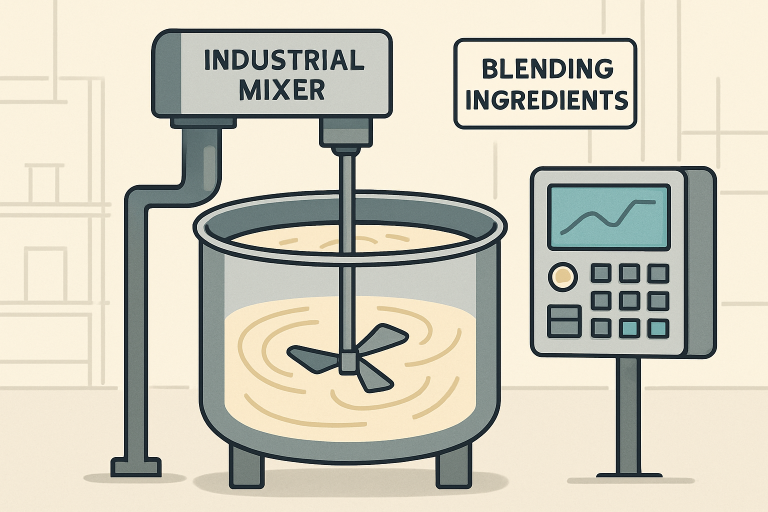
Modern industrial mixers represent the intersection of engineering prowess and digital intelligence. A new era of smart manufacturing is being defined by equipment equipped with sensors, programmable controllers, and AI-driven analytical capabilities. These mixers can monitor and adjust speed, torque, temperature, and a host of other variables without human intervention, resulting in the repeatable quality that global industries rely upon. Automated control systems allow mixers to communicate with other machinery on the factory floor, synchronizing with upstream and downstream processes for continuous, end-to-end production. Furthermore, the adoption of AI and machine learning enables mixing equipment to refine its performance with each batch, optimizing parameters for efficiency and reliability.
Energy Efficiency and Sustainability
Sustainability and cost-effectiveness are pressing concerns across industries, and modern mixers address them head-on. Manufacturers are implementing energy-smart motors, variable frequency drives, and advanced control software to minimize energy use without reducing output quality. These systems are designed to match energy consumption in real time to workload demands, avoiding waste and reducing operational costs. In parallel, computational fluid dynamics tools, often powered by machine learning, help optimize component designs for maximum efficiency, whether by minimizing resistance or enhancing flow dynamics. The adoption of recyclable materials and the use of environmentally friendly lubricants enable further progress towards greener manufacturing operations. Many companies are deploying energy recovery systems that reclaim heat or motion energy, exemplifying resource conservation and reducing their ecological footprint, initiatives that echo broader sustainability movements highlighted in reputable publications such as McKinsey & Company.
Customization and Modular Designs
The need for adaptability has propelled the rise of modular design in industrial mixers. Instead of investing in single-purpose machines, manufacturers are opting for customizable systems that can be tailored to specific applications. Modular mixers allow users to quickly switch out impellers, shafts, tanks, and control units, accommodating changes in batch size, formulation, or material properties. This approach not only delivers agility in production but also extends equipment’s useful life and reduces total cost of ownership. Modularization further empowers businesses to keep pace with market shifts, bringing new products to market faster and responding dynamically to customer requirements.
Impact of Industry 4.0 on Mixing Processes
The integration of Industry 4.0 principles is transforming industrial mixers from isolated machines into networked, data-rich contributors to the production environment. Advanced sensors stream data to central control hubs, while machine learning algorithms analyze this information to predict maintenance needs or optimize dosing and mixing times. This connectivity enables predictive maintenance, reducing downtime, lowering costs, and ensuring uninterrupted production. According to a recent analysis, the global industrial mixer market is projected to grow significantly, underlining the broad impact of digital transformation in manufacturing.
Applications Across Industries
Food Processing
Mixers are vital in food manufacturing, ensuring homogenous mixtures for sauces, batters, doughs, and beyond. Consistency in texture and taste is key, particularly in large-scale production where recipe integrity must be maintained across batches.
Pharmaceuticals
The pharmaceutical sector depends on precise ingredient blending for efficacy and safety. Industrial mixers engineered to meet hygienic processing standards enable the production of high-purity medications and supplements at scale.
Chemicals and Construction
Chemical manufacturers use mixers to create uniform chemical compounds and polymers, while the construction industry uses them to combine raw materials into adhesives, mortars, and concrete.
Future Trends in Industrial Mixing
Looking ahead, the development trajectory of industrial mixers points toward greater levels of automation, efficiency, and flexibility. The next generation of mixing systems will prioritize smart connectivity, linking seamlessly to enterprise resource planning and quality control systems. Environmental imperatives will continue to influence both design and operational practices, driving the adoption of systems that minimize resource usage and extend equipment longevity. The global market’s projected growth to over USD 6.4 billion by 2035 signals not only increased demand but also heightened expectations around performance, adaptability, and sustainability.
Conclusion
Industrial mixers are essential pillars of modern manufacturing, playing a core role in driving productivity, quality, and innovation. Their ongoing evolution in response to technological and market changes ensures they will remain indispensable as manufacturers face new challenges and seek sustainable growth.

- How Jacksonville, Florida Homeowners Can Spot Hidden Plumbing Leaks Before Damage Spreads - September 15, 2026
- How to Reduce Workplace Noise and Vibration With R.T. Laird, Inc. Casters - September 15, 2026
- Find Chicago Souvenir Gifts Faster With SouvenirCityChicago - August 29, 2026