

Horse jump poles do far more than complete the look of an arena. Their length, weight, diameter, finish, and condition all affect how clearly a horse sees an exercise and how reliably the equipment performs during daily schooling. The best choice depends on the horse and rider, the standards already in use, the arena size, and whether the poles will be used on the ground, in cavaletti, or on raised fences.
When comparing round wooden jump poles for sale, riders can use Old Dominion Horse Jump Company’s pricing and ordering page to compare 10-foot and 12-foot pole options alongside related wooden standards, cups, cavaletti, and jump components. Based in Washington, Virginia, the company focuses on wooden horse-jump equipment for home arenas, farms, and competition settings, and handles shipping inquiries using the buyer’s city and ZIP code. A useful pole should be visible, straight, suitably weighted, easy to inspect, and compatible with the rest of the jump.
Table of Contents
Start With the Right Pole Length
Ten-foot and 12-foot poles are common choices for horse jumps. A 10-foot pole can be practical in a smaller arena, for pony fences, or where compact schooling exercises are the priority. A 12-foot pole is better suited to wider standards and creates a broader visual picture for a full-sized horse.
Before buying a full set, measure the distance between your standards and consider the exercises you regularly perform. A pole that is too short can make a fence look narrow or leave too little overhang beyond the cups. Shorter rails can also make a fence feel more technical, which may be useful in some exercises but should be intentional.
Round Poles, Square Rails, and Clear Questions
Round poles are widely used because they provide a traditional rail appearance and work well for ground-pole patterns, cavaletti, cross-rails, verticals, and oxers. Their round shape also means they can roll if they are placed improperly, used in unsuitable cups, or knocked out of position. Stable standards and correctly fitted jump cups are essential.
Square rails and timber-style elements can create a different visual effect, while round poles offer a familiar profile for many schooling fences. Whichever shape is used, match it to the standards, cups, and intended exercise. Elevated rails should not be treated as casual walk-over obstacles. Set them deliberately and supervise horses around raised equipment.
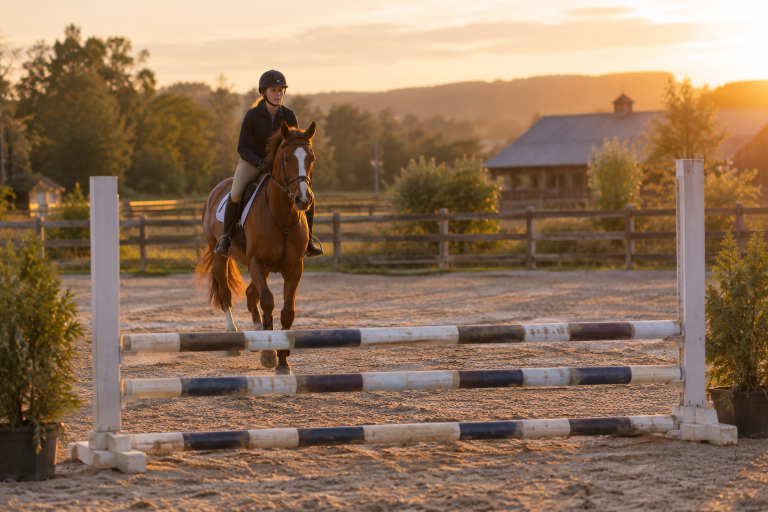
Choose a Practical Weight and Diameter
A jump pole needs enough weight to remain settled during normal work, especially when it is resting on arena footing or being used as a ground line. At the same time, it should be used in a setup that allows it to dislodge when a horse strikes it. Extremely light poles may roll, shift, or move after minor contact, making the exercise less predictable.
Many traditional wooden jump poles are round or octagonal and are commonly made in diameters that feel substantial in the hand without becoming difficult to handle. Consistency matters as much as any single measurement. Mixing dramatically different pole weights or diameters in the same fence can create an uneven visual question for the horse.
Compare Materials Before You Buy
Wood, PVC, composite materials, and repurposed landscape timbers are not interchangeable. Wooden poles are often selected for their traditional appearance, useful weight, and ability to be sanded, repainted, or resealed over time. PVC and other lightweight materials may be appropriate for some ground exercises, but they can behave differently when stepped on or contacted.
Regardless of material, do not use poles with deep cracks, splinters, sharp edges, severe warping, or loose coatings. A pole that works acceptably on the ground may not be suitable as a raised rail. Inspect every pole according to the job it will perform.
Use Paint and Stripes for Visibility
Contrast can help a horse distinguish the rail from the footing, shadows, walls, trees, or surrounding scenery. Unpainted wood may work well in some settings, while white, striped, or colored poles can improve definition in others. The best finish depends on the light in your arena and the colors already used on standards and fillers.
Keep rails that belong to the same obstacle visually consistent whenever possible. Check painted poles for peeling paint, rough areas, and exposed wood. A clean finish is not only about presentation. It also makes it easier to spot damage during routine equipment checks.
Match the Pole to the Training Goal
- Ground poles: Choose straight, visible poles that rest securely on the arena surface.
- Cavaletti: Use poles that fit purpose-built blocks or adjustable supports correctly.
- Cross-rails: Use matching poles, stable standards, and cups sized for the rails.
- Verticals: Select consistent rails to present a clear, uncomplicated question.
- Oxer fences: Build a balanced spread without overcrowding the standards or adding unnecessary visual clutter.
- Small schooling fences: Favor simple materials that let horse and rider focus on rhythm, line, and straightness.
Consider How Footing Affects Pole Performance
Footing influences how poles sit on the ground and how readily they shift. Deep, uneven, dry, wet, or poorly maintained footing can affect stability, so check the arena before setting an exercise. Remove debris, exposed stones, and other hazards, then place ground poles as evenly as possible. Guidance on selecting and managing riding arena footing can help arena owners consider traction, cushioning, drainage, and maintenance alongside jump placement.
Complete a Safety Check Before Schooling
- Inspect poles for splits, sharp edges, cracks, warping, and loose paint.
- Make sure standards sit level and do not wobble.
- Confirm that cups are undamaged and fit the rails securely.
- Remove equipment that is excessively light, damaged, or unsuitable for raised use.
- Walk the riding area and clear objects that could create a trip hazard.
- Use appropriate riding safety equipment and follow the rules for your discipline.
Keep Competition Requirements in Mind
Rules for warm-up areas, schooling zones, and competition courses can vary by discipline and organizer. If you are preparing a recognized event or riding under a specific organization’s rules, review the applicable requirements before building the course. Riders involved in US jumping competition can consult US Equestrian jumping information for discipline resources and current rule-related materials. Home setups allow more flexibility, but careful construction and safe placement still matter.
Storage, Maintenance, and Common Buying Mistakes
Store poles off wet ground, away from standing water, and on racks or supports that reduce bending. Rotate them when practical, touch up worn paint, and reseal exposed wood as needed. Inspect stored equipment again before placing it back in the arena.
Avoid buying rails that are too short for your standards, mixing very different pole styles within a single fence, relying on damaged landscaping timbers, or choosing a color without considering its contrast against the arena background. Price matters, but long-term value also includes fit, condition, visibility, storage needs, and ease of integration with your existing equipment.
Quick Buying Checklist
- Does the length fit your current standards and intended fences?
- Is the pole straight, sound, sanded, and free of dangerous damage?
- Is its weight appropriate for ground work, cavaletti, or raised rails?
- Will the finish remain visible in your arena’s light and background?
- Do your jump cups fit and support the pole properly?
- Can you store the poles dry and supported?
Frequently Asked Questions
What length should round horse jump poles be?
Ten-foot and 12-foot poles are common options. Choose based on standard width, arena space, horse size, and the type of fences you plan to build.
Are round poles safe for jumping?
They can be appropriate when they are sound, properly supported, used with suitable cups and standards, and inspected regularly.
Can the same poles be used for ground work and jumps?
Many poles can be used for both, but raised rails require more careful attention to their condition, support, and placement than flat-lying poles.
Conclusion
The right round horse jump poles combine suitable length, dependable construction, clear visibility, practical weight, and regular maintenance. Select equipment for the exercises you actually ride, not simply for appearance or initial cost. Thoughtful choices help create a more organized arena and support consistent, safer schooling.

- How To Choose Round Horse Jump Poles For Safer, More Flexible Training - November 11, 2026
- How to Choose the Right Industrial Bearing for Dallas, Texas Operations - November 11, 2026
- How Pier-A-Mid Inc. Solves Foundation Voids and Settlement Problems: A Guide to Cementitious Grouting Contractors in Texas - October 29, 2026